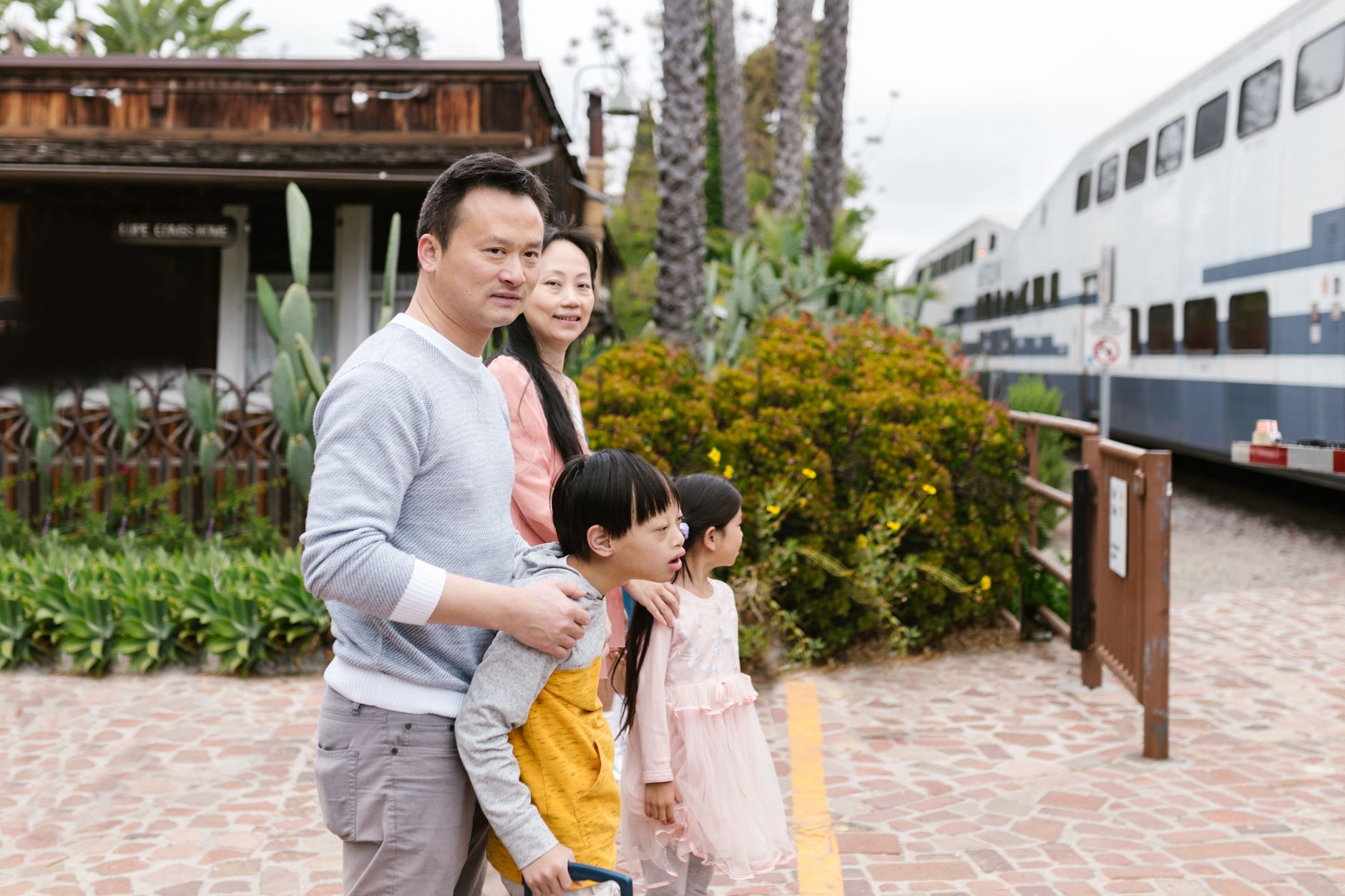
Every parent dreads travel delays, especially with little ones in tow. But what if I told you there are local secrets, hidden gems, and clever tricks that turn those dreaded waits into unexpected adventures? Get ready to unlock the insider playbook that locals use to keep their kids happily entertained, far from tourist traps and screen time overload. ---
Unlock Local Secrets: Keep Kids Happy During Travel Delays (The Insider Playbook!)
The email flashed across my phone: "Flight BA249 Delayed by 4 Hours." My heart sank faster than a poorly packed suitcase. We were stuck in London Heathrow, my two kids (then 4 and 7) already restless from the early start, and the prospect of four more hours confined to an airport terminal felt like a special kind of parental torture. My initial reaction? Panic. My second? To reach for the iPad. But then I looked around.
I saw a British mum, calmly engaging her toddler in a game of "I Spy" with the airport's distinctive red signs. Another family was sketching in notebooks, seemingly oblivious to the chaos around them, illustrating the different uniforms of airport staff. It hit me: these locals weren't just enduring the delay; they were owning it. They weren't fighting the environment; they were using it.
That day, I put away the screen and started observing. I asked questions. I experimented. And what I discovered was a treasure trove of "local secrets"—strategies that aren't about buying expensive toys or finding a dedicated play area, but about embracing the environment, culture, and simple joys around you. These are the tricks locals use, often instinctively, to turn tedious waits into genuine, memorable adventures. And trust me, once you know them, you’ll never dread a delay the same way again.
Ready to transform those dreaded travel delays into unexpected moments of discovery and connection? Let's dive into the insider playbook!
1. The Art of Observation: Turning Waiting into Wonder
Locals don't need fancy distractions; they simply engage with what's around them. This is perhaps the most powerful "secret" of all: teaching your kids to see and interact with their immediate environment, no matter how mundane it seems.
The "Local Lens" Game: Instead of just "I Spy with my little eye," make it culturally specific. Waiting for a train in Kyoto, Japan? "I spy with my little eye something that looks like a temple roof!" or "I spy something a sararīman (businessman) might carry." In a bustling market in Marrakech, Morocco, "I spy a spice that smells like sunshine!" or "I spy a pattern that looks like a mosaic." This encourages kids to pay attention to details unique to their location.
- Actionable Tip: Before you leave, do a quick Google search for common local sights, sounds, or objects. Write down a few prompts.
- Personal Anecdote: During a ferry delay in the Greek islands, my son and I played "Who's Got the Best Moustache?" pointing out various elderly gentlemen (discreetly, of course!). We then made up stories about where they were going and what their lives were like. It sparked incredible imagination and we learned a lot about local culture just by observing the people around us.
- Instagram-Worthy Moment: A candid shot of your child pointing excitedly at a local architectural detail, their face alight with discovery.
2. Pocket-Sized Playgrounds: Local-Inspired Carry-Ons
Forget bulky toys. Locals often carry minimal, multi-purpose items. The trick is to infuse your essentials with a touch of local flavor.
The "Cultural Sketchbook & Story Starter": Instead of just a plain notebook, invest in a small, locally-made journal or sketchbook from a market. Pair it with a few colored pencils. Encourage kids to draw what they see: the unique patterns on a local’s scarf, the architecture of the station, a new fruit they’ve tried. For older kids, use it as a "story starter." Give them a local character (e.g., a gondoliere in Venice, a gaucho in Argentina) and a local setting, and have them write or draw a short story.
- Actionable Tip: Before your trip, or upon arrival, grab a small, inexpensive notebook from a local stationery shop (often much cheaper and more authentic than tourist souvenir shops). Look for one with a local design.
- Specifics: A beautiful, small artisan notebook in Florence, Italy, might cost €5-€10. A simple one from a grocery store could be €1-€2. The value is in the cultural connection.
- Personal Anecdote: Waiting for a bus in rural Vietnam, my daughter, armed with her little locally-bought sketchbook, drew the chickens pecking outside the window and the distinctive conical hats of the women passing by. She then tried to label them with the few Vietnamese words we knew. It was a beautiful, quiet moment of cultural immersion.
- Instagram-Worthy Moment: A close-up of a child's hand drawing a local scene in a rustic notebook, perhaps with a local landmark subtly blurred in the background.
The "Language Link-Up": Carry a small, simple phrasebook or a few flashcards with local words. During a delay, practice greetings, numbers, or simple questions. Then, challenge your kids (and yourself!) to use them with a local. Most people are delighted when tourists make an effort.
- Actionable Tip: Download a free translation app like Google Translate or Duolingo for basic phrases. Make it a game: "Can you say 'thank you' to the person who just cleaned our table?"
- Specifics: Many airports and train stations have newsstands selling small, cheap local newspapers or magazines. Even if you can't read them, they offer a glimpse into local culture and can be used for "find the letter" games or identifying local celebrities.
3. Culinary Cues: Taste-Testing Adventures
Food is a universal language, and delays are the perfect excuse for a mini-culinary adventure, often overlooked by tourists rushing to their next destination.
The "Mystery Snack Challenge": Instead of hitting the chain restaurant, seek out a local bakery, market stall, or small cafe near your delay point. Buy a few unfamiliar local snacks (e.g., a specific pastry, a unique fruit, a regional candy). Have your kids guess the ingredients or flavors. It's a delicious way to engage their senses and learn about local cuisine.
- Actionable Tip: Ask a local (e.g., a shopkeeper, a security guard) for their favorite local snack recommendation. They'll often be thrilled to share.
- Specifics: In Spain, a bag of churros with chocolate dip might cost €3-€5. In Thailand, a mango sticky rice from a street vendor could be ฿50-฿80 (around $1.50-$2.50 USD). These are small, affordable indulgences that offer a big cultural payoff.
- Personal Anecdote: Stuck in a bus station in Oaxaca, Mexico, we discovered nieves (Mexican sorbet) from a tiny cart. We tried tuna (prickly pear) and chile flavors. My kids were initially skeptical but ended up loving the adventure of trying something so different. It turned a hot, boring wait into a vibrant, tasty memory.
- Instagram-Worthy Moment: A child's face covered in crumbs from a delicious, brightly colored local pastry, with a backdrop of a bustling market or cafe.
The "Foodie Field Guide": Give each child a small notebook (or use their sketchbook) and have them draw or write about every new food they try during the delay. They can rate it, describe the taste, and even try to spell its local name. This creates a fun "food passport" for their journey.
4. The Sound of Discovery: Audio Adventures
Our ears are powerful tools for cultural immersion, yet we often block out the sounds of travel. Locals, accustomed to their surroundings, often find comfort or information in the ambient noise.
The "Sound Safari": Close your eyes (or just listen intently) and identify all the sounds around you. How many different languages can you hear? Can you distinguish different types of vehicles, music, or announcements? Make a game of it: "I hear two different languages, can you find a third?" or "What's that whistling sound?"
- Actionable Tip: Don't automatically reach for headphones. Encourage a few minutes of active listening.
- Specifics: In a busy European train station like Berlin Hauptbahnhof, you might hear German, English, French, and Polish announcements, alongside buskers playing accordions and the rumble of ICE trains.
- Personal Anecdote: During a two-hour train delay in rural France, we sat near an open window. My kids started identifying the sounds of different farm animals, the distinct ringing of a church bell, and the distant rumble of a tractor. It was surprisingly meditative and connected them to the countryside in a way a screen never could.
- Instagram-Worthy Moment: A serene shot of your child, eyes closed, perhaps with a slight smile, as if lost in the symphony of local sounds.
Local Lullabies & Legends: If you have data or Wi-Fi, look up simple local children's songs or traditional folk tales on YouTube or Spotify. Learning a few lines of a local lullaby can be a sweet, calming activity, especially for younger kids. For older ones, a quick search for local legends or myths can spark their imagination.
5. Movement & Mindfulness: Getting Those Wiggles Out (Locally!)
Kids need to move, and delays often mean confined spaces. But locals know how to find pockets of permissible movement, even in busy areas.
The "Quiet Corner Circuit": Seek out less crowded areas – perhaps a quiet hallway, an unused gate, or even a less-trafficked section of a cafe. Here, you can do quiet, contained movements. "Animal walks" (crab walk, bear crawl) are great for younger kids. For older ones, gentle stretches, yoga poses, or even a silent "follow the leader" mimicking local gestures (e.g., a polite bow in Japan, a shrug in France) can release energy without causing disruption.
- Actionable Tip: Always be mindful of your surroundings and others. The goal is quiet, contained movement, not a full-blown playground session.
- Specifics: Many larger airports have prayer rooms or quiet zones that are often underutilized and can offer a calm space for a few minutes of quiet movement.
- Personal Anecdote: In a remarkably clean, but somewhat sterile, German train station during a delay, we found a long, empty corridor. My kids played a silent game of "Red Light, Green Light" and "Simon Says" with gentle stretches. It was just enough to burn off some steam without bothering anyone.
- Instagram-Worthy Moment: A blurry, playful shot of a child mid-animal walk in a surprisingly quiet corner of a bustling transit hub, showing the contrast between movement and stillness.
The "Observation Walk": If safe and permissible, take a short walk around the immediate vicinity. Not just to find a bathroom, but to actively observe. Count the number of different types of shops, look for specific colors, or find all the signs in the local language. Turn it into a scavenger hunt.
6. The Storyteller's Compass: Crafting Local Narratives
Locals grow up with stories tied to their land, their history, and their people. Delays are a perfect opportunity to tap into this narrative wellspring.
"The Local Character Creation": Look at the people around you. Pick one (again, discreetly!) and, with your kids, invent a story about them. Where are they going? What's in their bag? What's their favorite local food? This isn't about judging, but about sparking empathy and imagination using real-world inspiration.
- Actionable Tip: Start the story, then let your child add a sentence, then you add one, and so on.
- Personal Anecdote: Waiting for a domestic flight in Colombia, we saw a woman with a huge, beautifully woven basket. My daughter and I spent 20 minutes creating a fantastical story about her being a magical weaver, carrying enchanted threads to a hidden village high in the Andes. It was so much more engaging than staring at a screen.
- Instagram-Worthy Moment: A child looking thoughtfully out a window at a diverse crowd, perhaps with a small notebook in hand, hinting at the stories being imagined.
"What Happens Next?": If you have a local guidebook or even just a map, point to a landmark you've seen or are about to see. Ask your kids: "What do you think happened there 100 years ago?" or "If this building could talk, what story would it tell?" This ties their imagination directly to the destination and its history.
The Ultimate Local Secret: A Shift in Mindset
Ultimately, the biggest "secret" locals hold isn't a specific toy or activity, but a mindset. They understand that delays are an inevitable part of life and travel. Instead of fighting them, they integrate them. They see these moments as opportunities: to rest, to observe, to connect, to simply be.
By embracing these local-inspired strategies, you're not just entertaining your kids; you're teaching them resilience, cultural awareness, and the joy of finding adventure in unexpected places. You're showing them that the world is a playground, not just a series of planned attractions.
So, the next time that dreaded "delay" notification pops up, take a deep breath. Put away the screen. Look around. What local secrets can you unlock today? What unexpected adventure awaits?
What are your go-to delay hacks? Have you discovered a local secret that saved your sanity? Share your tips in the comments below! Let's build the ultimate insider playbook together.
---
More pictures



Tags
Share this guide
We may earn a commission if you click a link and buy a product or service, at no extra cost to you. How affiliate links work.
Been there?