
Forget tourist traps and overpriced meals! Discover how to unlock a world of incredible, authentic local food experiences for mere pennies, just like the pros do. Get ready to transform your travel budget and your taste buds with these trending food hacks. ---
Forget the Michelin Stars, Find the Street Stalls: How to Eat Like a Local for Pennies That Are Trending Right Now
I still remember my first proper solo trip to Southeast Asia. I was a wide-eyed, budget-conscious backpacker, armed with little more than a rusty phrasebook and an insatiable appetite. One evening in Bangkok, after a particularly grueling day of temple hopping, my stomach grumbled a protest. I was low on cash, exhausted, and admittedly, a little intimidated by the sheer chaos of the street food scene. Every corner pulsed with sizzling woks, fragrant curries, and unfamiliar ingredients.
I spotted a tiny stall, barely more than a cart with a few plastic stools, where a queue of locals snaked down the alley. Hesitantly, I joined the line. The vendor, a wizened woman with a warm smile, pointed to a steaming pot. I had no idea what it was, but for 50 baht (about $1.50 USD), I figured, what's the worst that could happen? What I received was a bowl of the most incredible, aromatic noodle soup I had ever tasted – rich broth, tender pork, fresh herbs, and a spicy kick that warmed me from the inside out. It wasn't just a meal; it was an epiphany.
That moment changed how I travel. It taught me that the best food experiences aren't found in glossy guidebooks or fancy restaurants. They're found in the heart of local life, on bustling street corners, in humble markets, and through the recommendations of strangers who become friends. And the best part? These authentic culinary adventures often cost next to nothing.
In today's travel landscape, eating like a local for pennies isn't just a budget hack; it's a trend, a philosophy, and the ultimate way to truly immerse yourself in a culture. Forget the tourist traps and embrace the real deal. Here’s how you can eat like a seasoned local for mere pennies, no matter where your wanderlust takes you.
---
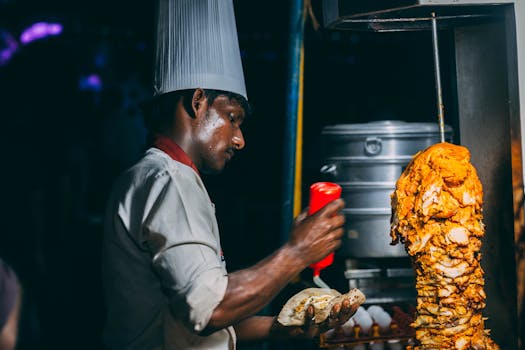
1. The Golden Rule: Embrace the Street Food & Market Scene (Your Wallet's Best Friend)
This is the holy grail of budget eating, folks. Street food isn't just cheap; it's often the freshest, most authentic, and most flavorful food you'll find. It's where grandmothers' recipes come alive, passed down through generations, cooked with passion and served with a smile.
Why it's trending: Travelers are craving authenticity. They want to see the ingredients, smell the spices, and interact directly with the people preparing their food. Street food stalls offer a sensory overload that no sit-down restaurant can replicate. Plus, the convenience of grabbing a quick, delicious bite on the go fits perfectly with a busy travel itinerary.
How to master it:
- Follow the locals: This is your number one indicator of quality and safety. A stall with a long queue of locals is almost always a winner. If they trust it, you can too.
- Look for high turnover: Places that are constantly cooking and serving mean fresh ingredients.
- Observe cleanliness: While some street food experiences are inherently rustic, look for vendors who handle food hygienically, use fresh utensils, and keep their cooking area reasonably tidy.
- Don't be afraid to point: Language barrier? No problem. Point to what looks good, or what others are eating. A smile and a "Gracias" or "Khob khun ka" go a long way.
- My Experience: From the legendary Pad See Ew I snagged for just $2 in a hidden alley in Chiang Mai, Thailand, to the tacos al pastor that changed my life for 50 cents a pop in Mexico City, street food has consistently been my most memorable (and cheapest) dining experience. In Vietnam, a steaming bowl of pho from a tiny family-run stall in Hanoi cost me less than $3, and it was infinitely better than any upscale version I’ve tried. These are not just meals; they are cultural touchstones.
Instagram-worthy moment: Capture the vibrant colors of fresh produce at a local market, the steam rising from a sizzling wok, or the intricate details of a meticulously prepared dish served on a simple plastic plate. Use hashtags like #StreetFoodAdventures #[City]StreetFood #EatLikeALocal.
---
2. Master the Art of the "Menu del Día" or Lunch Specials
Many countries, particularly in Europe and Latin America, have a fantastic tradition of offering a "Menu del Día" (menu of the day) or "Almuerzo Ejecutivo" (executive lunch). This is typically a multi-course, fixed-price lunch that is significantly cheaper than ordering à la carte or having dinner at the same establishment.
Why it's trending: Savvy travelers have realized this is the ultimate hack for experiencing quality restaurant food without the hefty dinner price tag. It's a chance to sample local cuisine, often home-style cooking, in a more relaxed setting.
How to find and utilize it:
- Look for signs: Restaurants will often display their Menu del Día on a chalkboard outside, or have a separate, smaller menu available.
- Ask: If you don't see one, politely ask "Hay menú del día?" or "Do you have a lunch special?"
- Understand what's included: Usually, it's a starter (soup or salad), a main course (meat, fish, or vegetarian option), a drink (water, soft drink, or even a small glass of wine/beer), and sometimes dessert or coffee.
- My Experience: In Spain, I’ve regularly enjoyed three-course meals with wine and bread for €10-€15 (about $11-$17 USD). One unforgettable Menu del Día in Seville included a traditional gazpacho, a succulent paella valenciana, and a rich flan for dessert, all for €12. In Colombia, a hearty almuerzo often includes soup, a main dish (like bandeja paisa), rice, and a drink for as little as $5 USD. This strategy allows you to experience the local restaurant scene without blowing your daily budget.
---
3. Befriend the Locals: Your Ultimate Foodie Tour Guides
No app, no guidebook, no blog (yes, not even this one!) can beat the insider knowledge of a local. They know the hidden gems, the family-run joints, and the best places for specific dishes that tourists rarely stumble upon.
Why it's trending: Travelers are seeking deeper connections and authentic experiences. Engaging with locals provides not only food recommendations but also cultural insights and sometimes even new friendships.
How to connect:
- Strike up conversations: At your hostel, guesthouse, or even a local park. Ask your Airbnb host, a friendly shopkeeper, or a bartender.
- Learn a few local phrases: Even a simple "Hello," "Thank you," and "Where do you eat?" can open doors.
- Be specific: Instead of "Where's good to eat?", try "Where do you go for the best [local dish] that's not too expensive?" or "Where's a good place for a local breakfast?"
- My Experience: In Rome, I was chatting with the owner of a small artisan shop about my love for cacio e pepe. He immediately scribbled down the name of a tiny, unassuming trattoria tucked away on a side street, advising me to go for lunch. It was a place I would have walked past a hundred times, but it served the most incredible, authentic Roman pasta I’ve ever had, for a fraction of the price of the touristy spots. Another time in Lisbon, a friendly barista pointed me to a bakery where I discovered pastel de nata so fresh and cheap, it became my daily ritual. These aren't just food tips; they're invitations into the local way of life.
---
4. Supermarkets, Bakeries & Picnics: Your Budget Food Allies
Sometimes, the best meal is one you assemble yourself. Local supermarkets and bakeries are treasure troves of affordable, delicious ingredients perfect for snacks, breakfasts, or a scenic picnic.
Why it's trending: There's a growing desire for self-sufficiency and mindful eating while traveling. Plus, a picnic allows you to enjoy a meal in an iconic location without the restaurant markup.
How to make it work:
- Hit the local grocery stores: Skip the convenience stores. Large supermarkets offer amazing deals on fresh produce, local cheeses, cured meats, bread, and drinks. This is especially useful for breakfast items like yogurt, fruit, and coffee, saving you a fortune compared to hotel breakfasts.
- Embrace local bakeries (boulangeries, panaderías, pasticcerias): Freshly baked bread, pastries, and sandwiches are incredibly cheap and delicious. Grab a croissant in Paris for €1, a sfogliatella in Naples for €1.50, or a fresh bolillo in Mexico for pennies.
- Pack a picnic: Buy your goodies from the market or supermarket, find a beautiful park, a scenic viewpoint, or a lively square, and enjoy an unforgettable meal. Think fresh baguette, local cheese, olives, fruit, and a bottle of regional wine.
- My Experience: I’ve had some of my most memorable meals on park benches. A picnic by the Eiffel Tower with a baguette, brie, and a bottle of rosé from a Parisian supermarket (total cost: less than €10) felt more luxurious than any expensive restaurant. In Amsterdam, I assembled a fantastic spread of Dutch cheeses, smoked sausage, and stroopwafels for an afternoon by the canals, costing me under €15 for a feast that would have been triple at a cafe. This strategy is not only budget-friendly but also incredibly romantic and relaxing.
---
5. Leverage Technology & Observation: Your Digital & Real-World Detectives
In the age of information, your smartphone is a powerful tool for finding budget-friendly food, but don't underestimate the power of simply looking around.
Why it's trending: Travelers are increasingly tech-savvy, using apps and online communities to find hidden gems and authentic experiences. However, there's also a counter-trend of "unplugging" and relying on observation, which can be just as effective.
How to be a food detective:
- Google Maps & Reviews: Before you go, or when you’re out and about, use Google Maps. Search for "restaurants," "street food," or specific dishes. Crucially, filter by "lowest price" or check reviews for mentions of "cheap," "local," or "good value." Look at the photos – if they’re full of locals, you’re on the right track.
- Instagram & TikTok: Search hashtags like #[City]Food #CheapEats[City] #LocalEats #[City]StreetFood. Often, local food bloggers or adventurous travelers will have already documented the best spots.
- Local Blogs & Forums: A quick search for "budget food [city name] blog" or "local food forum [city name]" can unearth incredible, hyper-local recommendations.
- Observe the queues (again!): I can't stress this enough. If you see a long line of locals, especially during peak meal times, that's your cue. In Naples, Italy, I found the best pizza al portafoglio (folded street pizza) for €2 by following a queue that wrapped around a block – a true local secret.
- Look for simple menus: Often, places with short, simple menus that specialize in a few dishes are the best and cheapest. They've perfected those dishes!
- My Experience: I once found an incredible hole-in-the-wall dumpling spot in Berlin through a tiny blurb on a German travel forum. It was a bare-bones place, but the dumplings were handmade, flavorful, and cost me less than €5 for a huge plate. Similarly, in Kyoto, Japan, a deep dive into Instagram hashtags led me to a tiny ramen shop tucked away down an alley, where a steaming bowl of delicious ramen was just ¥700 (about $5 USD).
---
6. Hydration Hacks & Adventurous Sips: Beyond Bottled Water
Staying hydrated is crucial, but buying bottled water multiple times a day can add up fast. Plus, local drinks offer a taste of the culture without breaking the bank.
Why it's trending: Sustainable travel is a huge focus right now, and reducing plastic waste from bottled water is a key part of that. Exploring local beverages also deepens the cultural experience.
How to sip smart:
- Carry a reusable water bottle: Invest in a good filtered water bottle (like a Lifestraw or Grayl) if you're unsure about tap water quality. Many hostels, cafes, and even some public places offer free water refills.
- Drink tap water (where safe): Research if the tap water is potable in your destination. In many Western countries, it's perfectly safe.
- Embrace local, non-alcoholic drinks: Instead of expensive sodas or imported juices, try local options. In Mexico, aguas frescas (fruit-infused waters) are incredibly refreshing and cheap. In Thailand, fresh coconut water or iced Thai tea are ubiquitous. In Turkey, ayran (a savory yogurt drink) is a local staple. These are often made fresh and are far more authentic.
- My Experience: On a scorching day in Cartagena, Colombia, instead of constantly buying plastic water bottles, I discovered agua de panela con limón (sugarcane water with lime) from a street vendor. It was incredibly refreshing, packed with energy, and cost less than $1 USD. Not only did I save money, but I also experienced a truly authentic local refreshment.
---
7. Be Fearless & Flexible: The Secret Ingredient to Culinary Discovery
The best budget food adventures often come from stepping outside your comfort zone, being open to new experiences, and letting serendipity guide you.
Why it's trending: The modern traveler seeks unique stories and personal growth. Being adventurous with food is a huge part of that journey.
How to cultivate culinary courage:
- Don't judge a book by its cover: The most delicious and authentic food often comes from the most unassuming, humble establishments. A tiny stall with a plastic tarp roof might serve the best curry you’ve ever had.
- Try new things: See a dish you don't recognize? Ask what it is, or just point and say "one of those!" You might discover your new favorite food. My rule: if it looks good and locals are eating it, I'll try it at least once.
- Embrace the unexpected: Sometimes, the best food experiences are unplanned. Getting lost down an alley and stumbling upon a bustling local eatery can be more rewarding than sticking to a rigid itinerary.
- My Experience: In Morocco, I was hesitant to try tanjia, a slow-cooked lamb dish, from a tiny, smoky restaurant in the Marrakech medina. But the aroma was intoxicating, and the locals were devouring it. I took the plunge, and it was one of the most tender, flavorful, and memorable meals of my life, costing a mere $7. This spirit of adventure has led me to countless delicious discoveries, proving that the best food memories often come from the least expected places.
---
Your Next Delicious Adventure Awaits!
Eating like a local for pennies isn't just about saving money; it's about enriching your travel experience in profound ways. It's about tasting the true flavors of a culture, connecting with its people, and discovering hidden culinary gems that most tourists miss. These trending food hacks empower you to be a more authentic, sustainable, and adventurous traveler.
So, the next time you're planning a trip, ditch the fancy reservations and embrace the street food, the local markets, and the wisdom of the locals. Your taste buds (and your wallet) will thank you.
What's your go-to budget food hack? Share your secrets in the comments below, and let's inspire each other to eat better, cheaper, and more authentically on our next big adventure! Happy eating, fellow travelers!
---
More pictures



Tags
Share this guide
We may earn a commission if you click a link and buy a product or service, at no extra cost to you. How affiliate links work.
Been there?