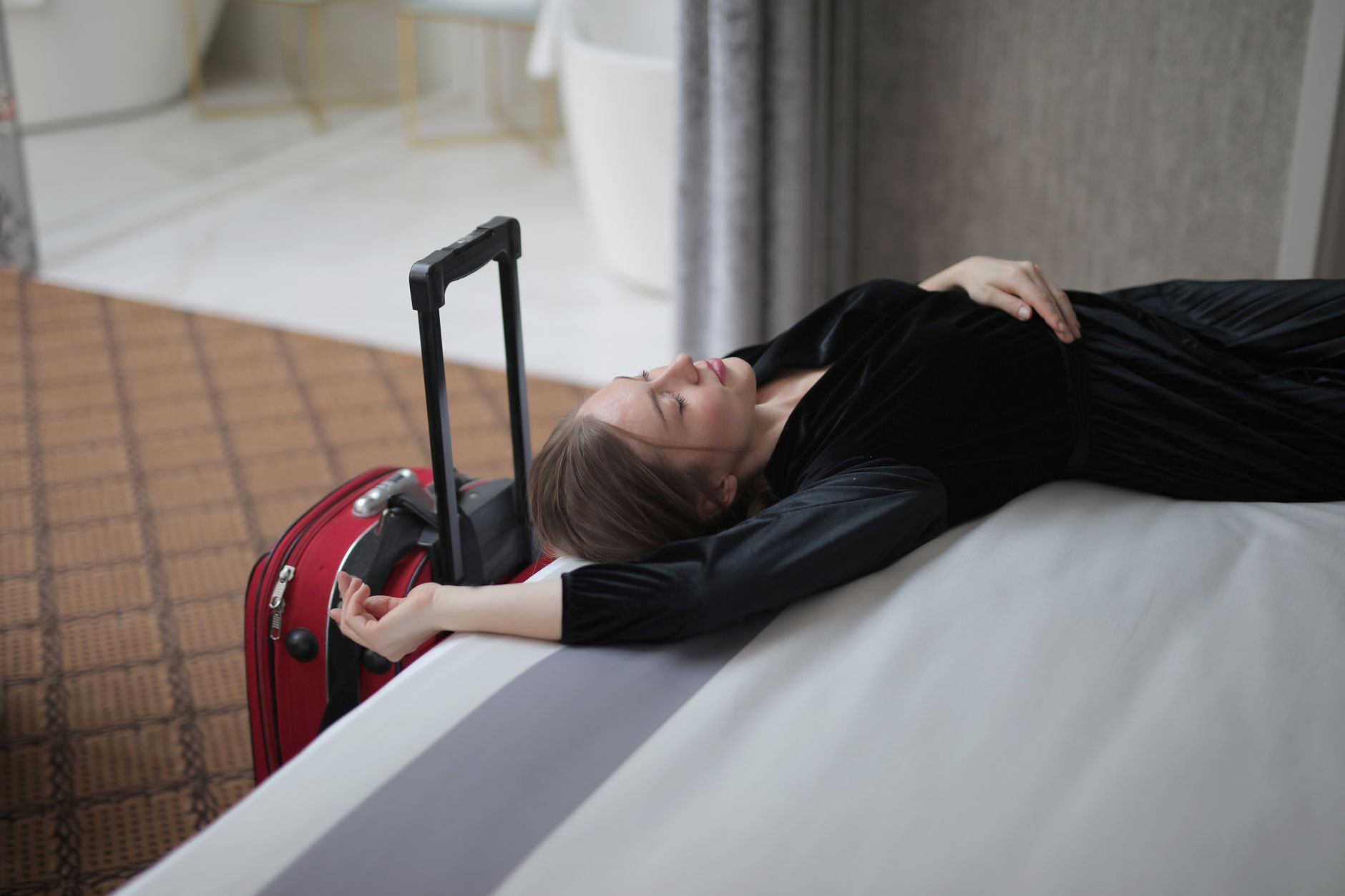
Ever landed in paradise only to feel like a zombie? Jet lag can steal precious days from your adventure, but it doesn't have to. I've cracked the code to beating jet lag in just 24 hours, and I'm sharing all the secrets those perfectly-posed travel influencers might not want you to know.
Picture this: I’d just landed in Tokyo, a city I’d dreamed of exploring for years. The vibrant energy of Shinjuku was palpable, neon lights painting the sky, and the scent of ramen wafting through the cool evening air. But instead of feeling the exhilarating rush of discovery, I felt... nothing. Just a crushing wave of exhaustion, a dizzying fog in my brain, and an overwhelming desire to crawl into bed at 7 PM. My body clock, still clinging to New York time, was screaming for sleep, while my watch insisted it was dinner. This wasn't the epic Japan trip I'd envisioned; it was a battle against my own biology.
That trip, almost a decade ago, was my jet lag rock bottom. I spent two precious days of my limited vacation in a zombie-like haze, missing out on late-night karaoke and early-morning temple visits. It was then I swore: never again. I became obsessed with understanding jet lag, devouring scientific papers, trying every "hack" under the sun, and meticulously tracking my own body's responses across dozens of time zones.
What I discovered, after countless long-haul flights from Sydney to San Francisco, London to Los Angeles, and everywhere in between, is that beating jet lag isn't about expensive gadgets or fancy supplements (though some can help). It’s about a disciplined, strategic approach that starts before you even leave your home. And honestly? It's not as glamorous as sipping champagne in business class or posing perfectly at a sunrise viewpoint. It requires effort, planning, and a bit of grit – which is probably why you won't see it plastered all over your favorite travel influencer's feed. They’d rather show you the result of their jet lag recovery (a perfect, refreshed selfie) than the process (the sweaty, slightly disoriented first 24 hours).
But here at Tripsora, we’re all about real travel, real experiences, and real solutions. So, buckle up, because I’m about to reveal my ultimate 24-hour strategy to conquer jet lag and reclaim your precious travel time. This isn't just theory; it's tried-and-tested wisdom from someone who lives out of a suitcase and demands peak performance from her body, no matter the time zone.
---
1. The Pre-Flight Prep: Your Jet Lag Secret Weapon (Starting 2-3 Days Out)
Most people think jet lag starts when you land. Wrong. It starts before you even pack your carry-on. This is where you get a head start on those influencers who just hop on a plane and hope for the best.
- Gradual Sleep Shift (The Sneaky Advantage): This is my number one secret. If you're flying east, try to go to bed and wake up an hour earlier each day for 2-3 days before your trip. Flying west? Shift an hour later. Even a small adjustment makes a huge difference. For my recent trip from New York to Rome (a 6-hour time difference), I started shifting my sleep by 45 minutes two days before, meaning I was already 1.5 hours closer to Italian time when I boarded my flight.
- Hydration is Non-Negotiable (Seriously): Start hydrating intensely 48 hours before your flight. Water, water, and more water. Avoid sugary drinks, excessive caffeine, and alcohol. Think of your body as a sponge; a well-hydrated sponge is more resilient. I always carry a reusable water bottle and aim for at least 3 liters a day pre-flight.
- Strategic Meal Timing: Try to align your meal times with your destination as much as possible, especially on the day of travel. If you're flying to a place where it will be breakfast when you land, try to have a lighter, breakfast-like meal before you board, even if it feels odd.
- Flight Selection - Arrival is Key: Whenever possible, book flights that arrive in the late afternoon or early evening at your destination. This gives you enough time to get to your accommodation, get some natural light, grab a light dinner, and then head straight to bed at a reasonable local hour. My go-to is usually a 4-7 PM arrival window. Landing at 6 AM might seem efficient, but it often means a brutal 12+ hour day trying to stay awake.
- Pack Your Sleep Arsenal: A good eye mask (I swear by silk ones, they feel so luxurious and block light perfectly), noise-cancelling headphones (Bose QC series are my splurge, but even good earplugs work wonders), and comfortable, loose clothing are your best friends. Don't forget a travel pillow that actually supports your neck – I learned this the hard way on a red-eye to Athens with a flimsy, deflated pillow.
---
2. Onboard Tactics: Conquering the Cabin Like a Pro
The moment you step on that plane, your destination's time zone becomes your reality. Forget what time it is back home.
- Immediately Adjust Your Watch: As soon as the cabin doors close, change your watch and phone to your destination's local time. This is a powerful psychological trick. Your brain starts to adapt, and you'll make better decisions about when to eat, sleep, or stay awake.
- Hydrate, Hydrate, Hydrate (Again!): The dry cabin air is your enemy. Keep sipping water constantly. Ask the flight attendants for extra water bottles. Avoid alcohol and excessive caffeine. That complimentary glass of wine might feel relaxing, but it dehydrates you and disrupts your sleep cycle, making jet lag worse. I usually bring my own electrolyte tablets to add to my water for an extra boost.
- Melatonin - Use It Wisely, Not Wildly: Melatonin isn't a sleeping pill; it's a hormone that signals to your body it's time for sleep. Take a small dose (0.5mg-1mg is often enough) about 30 minutes before you want to sleep at your destination's local time, but only if it's already dark at your destination. So, if you're flying east and it's nighttime at your destination, take it on the plane when it's "bedtime." If you're flying west, you might not need it on the plane at all. Overusing it or taking it at the wrong time can backfire. Consult your doctor first, of course!
- Move Your Body: Every 2-3 hours, get up and walk around the cabin. Do some simple stretches. This improves circulation, prevents stiffness, and helps you feel more awake when you need to be. On a 14-hour flight to Sydney, I practically paced the aisles like a caged tiger – it helped immensely!
- Strategic Light Exposure: If it’s daytime at your destination, keep your window shade open (if you have one) and expose yourself to light. If it’s nighttime, put on that eye mask, use your noise-cancelling headphones, and try to sleep. Resist the urge to binge-watch movies if it's "nighttime" at your destination.
---
3. The Golden Hour: Arrival & Immediate Actions (The First 3-4 Hours)
You've landed! This is the most critical phase for resetting your internal clock. Forget checking into your hotel and crashing. Those perfect influencer selfies? They’re powered by strategic post-landing moves.
- Seek Natural Sunlight – Immediately! This is THE most powerful tool against jet lag. As soon as you clear customs, get outside. Go for a walk, sit at a cafe, whatever it takes. Sunlight signals to your brain that it's daytime, helping to suppress melatonin production and reset your circadian rhythm. On my last trip to Lisbon, after an overnight flight, I forced myself to walk from my hostel in Alfama up to the Miradouro de Santa Luzia for the stunning views and, more importantly, that glorious morning sun. It hurt, but it was worth it.
- Resist the Nap (The Ultimate Test of Willpower): This is the hardest part, but it's non-negotiable for a 24-hour reset. Even a short nap can deepen your jet lag by making it harder to sleep at the correct local time later. If you absolutely MUST rest, limit it to 20-30 minutes and set an alarm. But ideally, avoid it entirely. I once landed in San Francisco after a red-eye and felt the overwhelming urge to nap, but I pushed through, grabbed a strong coffee (more on that next!), and walked along the Embarcadero. The fresh air and sunshine were my saviors.
- Strategic Caffeine Intake: If you're feeling sluggish, a cup of coffee or tea can be your friend – but use it wisely. Have it in the late morning or early afternoon to combat the dreaded "2 PM slump." Avoid caffeine after 3 PM local time, as it can interfere with your ability to fall asleep later.
- Light Exercise, Not a Marathon: A brisk walk, a gentle jog, or some stretching can boost your energy and help regulate your body clock. Don't hit the gym for a heavy workout, though; intense exercise too close to bedtime can be counterproductive. Exploring your new surroundings on foot is the perfect way to combine sightseeing with jet lag busting.
- Immerse Yourself: Don't hole up in your hotel room. Get out and experience your destination! The stimulation of new sights, sounds, and smells helps distract your brain from its internal clock confusion. Grab a local meal, visit a landmark, or simply people-watch from a cafe.
---
4. The 24-Hour Reset: Evening & First Night (The Payoff)
You've made it through the day! Now it's time to consolidate your efforts and ensure a restful first night.
- Light Dinner, Early: Aim for a light, easily digestible dinner a few hours before your intended bedtime. Avoid heavy, rich, or spicy foods, and definitely no alcohol. A simple pasta in Italy, a fresh salad in California, or even just some fruit and yogurt can be perfect.
- Wind-Down Routine: Treat your first evening like a normal evening at home. Avoid screens (phones, tablets, laptops) for at least an hour before bed. Read a book, take a warm bath, listen to some calming music. Signal to your body that it’s time to relax.
- The Perfect Sleep Environment: Make your room as dark and cool as possible. Use those eye masks and earplugs you packed. If your hotel has blackout curtains, use them! Aim for a bedtime that is reasonable for your new time zone – ideally between 9 PM and 11 PM.
- Melatonin (Again, if needed): If you're still struggling to fall asleep, a small dose of melatonin (0.5mg-1mg) 30 minutes before your desired bedtime can help reinforce the "sleep" signal. Remember, it's a gentle nudge, not a knockout punch.
---
5. Beyond 24 Hours: Sustaining the Rhythm
Congratulations, you've survived the first 24 hours! You should be feeling significantly better, but the work isn't entirely over. The next few days are about reinforcing your new rhythm.
- Consistency is Key: Try to stick to your new sleep and wake times as consistently as possible for the next few days. Even if you wake up before your alarm, get up! Don't hit snooze and confuse your body.
- Mindful Eating: Continue to eat meals at local times. This helps further anchor your internal clock.
- Regular Exercise: Keep up with light to moderate activity during the day. It boosts energy and promotes better sleep at night.
- Listen to Your Body: While the 24-hour reset is powerful, everyone is different. If you feel a slight dip in energy on day two, that's okay. A quick walk in the sun or a refreshing shower can usually get you back on track.
---
6. Why Influencers Don't Talk About It (The 'Secret' Angle Revealed)
So, why aren't these tips plastered all over the feeds of your favorite travel influencers? It's simple, really.
- It's Not 'Aesthetic': Waking up early to force yourself into sunlight when you're exhausted, chugging water instead of mimosas, or diligently avoiding screens isn't exactly Instagram-worthy content. There's no fancy filter for sheer willpower.
- It Requires Discipline, Not Just Good Lighting: The real secret to beating jet lag isn't a product they can link in their bio or a perfectly styled flat lay. It's about consistent, sometimes uncomfortable, discipline. It's the opposite of effortless glamour.
- It's About Process, Not Just Perfection: Influencers sell the dream – the perfect, seamless travel experience. My 24-hour jet lag recovery strategy acknowledges the struggle and provides a roadmap through it, not just a magic wand. They want you to see them looking flawless at sunrise; I want you to feel flawless at sunrise, even if it took a bit of effort to get there.
- It's Personal, Not Universal 'Sponsorable' Content: While some might promote a specific eye mask or supplement, the core of jet lag recovery is behavioral, not transactional. It's about understanding your body and making smart choices, which isn't easily monetized in the same way a sponsored hotel stay or fashion haul is.
My goal isn't to look like I've never been tired; it's to not be tired so I can genuinely experience every moment of my travels. And that, my friends, is a far more valuable commodity than any perfectly posed photo.
---
Ready to Reclaim Your Travel Days?
Jet lag doesn't have to steal precious moments from your adventures. With a little planning, discipline, and these insider tips, you can conquer it in 24 hours and hit the ground running, ready to embrace every new experience. Forget the zombie haze; say hello to vibrant, energized exploration!
The next time you're planning a long-haul trip, give this 24-hour strategy a try. I promise, the feeling of waking up refreshed in a brand new time zone, ready to explore, is priceless. It's how I went from missing out on Tokyo's magic to conquering multi-city European tours with boundless energy.
Your Turn: Have you tried any of these tips? Do you have your own secret weapon against jet lag? Share your experiences in the comments below! And if you found this guide helpful, don't keep it a secret – share it with your fellow travelers who deserve to beat jet lag too! Let's make every travel day count.
More pictures



Tags
Share this guide
We may earn a commission if you click a link and buy a product or service, at no extra cost to you. How affiliate links work.
Been there?