
Ever felt ripped off on vacation, or left a destination feeling like you only saw the "highlights" everyone else did? We've all been there. But what if you could unlock the secrets to truly authentic travel, bypassing the overpriced, overcrowded pitfalls? Get ready to transform your trips forever and discover the world like a true insider. ---
How to Avoid Tourist Traps Like a Pro That Will Blow Your Mind
I still remember the sting of that €15 cappuccino in Venice. Yes, fifteen euros. It was served in a charming-looking café right off St. Mark's Square, bustling with fellow wide-eyed tourists. The coffee itself was fine, but the price? It left a bitter taste long after the last sip. That moment, years ago, was my wake-up call. I realized I wasn't just paying for a coffee; I was paying the "tourist tax," and it wasn't just about the money. It was about missing out on the real Venice, the one where locals savored their espresso for a fraction of the cost, tucked away in a quiet alley.
That experience sparked a mission: to master the art of dodging tourist traps and unearth the genuine heart of every destination. What I discovered blew my mind – and transformed my travels from mere sightseeing into deep, immersive adventures. If you’re ready to ditch the queues, skip the overpriced gimmicks, and connect with places on a profound level, then grab your virtual notebook. I’m about to share the pro secrets that will change how you travel forever.
1. The Art of Pre-Trip Reconnaissance: Your Digital Detective Work
Before you even book your flight, your journey to authentic travel begins with meticulous research. Forget just skimming the top 10 lists on mainstream travel sites. We're going deeper.
Go Beyond the Guidebooks: While guidebooks offer a good starting point, they often highlight the same well-trodden paths. Instead, dive into more niche resources:
- Blogs and Forums: Search for "local's guide to [city]," "hidden gems in [city]," or "avoid tourist traps [city]." Read independent travel blogs, especially those written by expats or long-term residents. Reddit's r/travel and city-specific subreddits are goldmines for unfiltered advice.
- "Is [Attraction] a Tourist Trap?": This simple Google search can save you a lot of grief. For example, searching "Is the London Eye a tourist trap?" might reveal that while iconic, many locals suggest alternative viewpoints like the Sky Garden (free, but book ahead!) or even a walk along the South Bank for different perspectives.
- Google Maps Street View & Satellite: This is my secret weapon. Before I even arrive, I "walk" the streets around my accommodation and potential attractions. I look for:
- Local Businesses: Do you see small, non-chain shops, local bakeries, or markets?
- Restaurant Clues: Are there many restaurants with multi-language menus and glossy pictures of food outside? (Red flag!) Or do you see simple, unassuming eateries with handwritten signs and locals spilling out? (Green flag!)
- Proximity to "Main" Attractions: The further you stray from the immediate vicinity of a major landmark, the better your chances of finding authentic spots. That €15 cappuccino in Venice? Just a block away, I later found a tiny pasticceria where locals grabbed their espresso for €1.50 at the counter.
Personal Anecdote: When planning my trip to Marrakech, I initially looked at hotels right in Djemaa el-Fna. But my digital detective work (blogs from expats) pointed me towards staying in a Riad deeper in the medina, away from the square's immediate chaos. This led me to discover quiet alleyways, local bakeries, and small artisan workshops I would have completely missed in the tourist-heavy zone. It made all the difference in feeling truly immersed.
2. Befriend the Locals: Your Ultimate Insider Network
No amount of internet research can replace the wisdom of someone who lives and breathes the destination daily. Locals are your ultimate guides to authenticity.
Genuine Connections, Not Just Questions:
- Learn Basic Phrases: Even a simple "Hello," "Thank you," and "Do you speak English?" in the local language can open doors. It shows respect and a willingness to connect.
- Frequent Local Haunts: Instead of hopping from one café to another, find a local coffee shop or bakery near your accommodation and become a regular for a few days. The staff will start to recognize you, and conversations often follow naturally.
- Ask for Recommendations (The Right Way): Don't just ask "Where's good to eat?" Instead, try: "I'm looking for a place where you would go for [specific type of food, e.g., pasta, street food]. Not a tourist place, but where locals eat." Or, "Where do you go to relax after work?" These specific questions yield much better results.
- Utilize Apps & Platforms:
- Couchsurfing Hangouts: Even if you're not staying with a local, the "Hangouts" feature on Couchsurfing allows you to connect with locals and other travelers for meetups, walks, or coffee.
- Meetup.com: Look for groups related to your interests – hiking, photography, language exchange. You’ll meet locals who share your passions.
- Local Tour Guides: Consider booking a private tour with a local guide for your first day. They can provide invaluable insights, recommend hidden gems, and give you the confidence to explore independently later. I once hired a local guide in Rome for a "food tour" which was less about history and more about where he ate, introducing me to the best pizza al taglio and a tiny, family-run gelateria far from the Trevi Fountain crowds.
Personal Anecdote: In Hanoi, I was struggling to find a truly local pho spot amidst the many tourist-oriented ones. I struck up a conversation with a street vendor selling fruit, and with a mix of broken English and hand gestures, she pointed me down a narrow alley to a tiny stall with plastic stools. It had no English sign, just a bustling queue of locals. That bowl of pho, for about 30,000 VND (around $1.20 USD), was hands down the best I had in Vietnam – rich, aromatic, and utterly authentic. I would have never found it without her guidance.
3. Mastering the Market & Mealtime: Savoring Authenticity, Not Scams
Food and shopping are often where tourist traps lie in wait, ready to lighten your wallet and disappoint your palate. Being savvy here is crucial.
Food: Eat Like a Local, Not a Mark:
- Look for Queues of Locals: This is the golden rule. If a place has a line out the door, and it's mostly locals, you've hit the jackpot.
- No English Menus? Even Better! This often indicates a place catering to the local palate. Use Google Translate's camera function if you're feeling adventurous, or simply point to what others are eating.
- Fixed Prices vs. "Special" Prices: In many countries, locals pay a certain price, and tourists are quoted another. If there's no menu with prices, ask "How much?" before you order. If the price feels high, don't be afraid to walk away.
- Avoid Restaurants with "Callers": If someone is actively trying to pull you in from the street, especially near major attractions, it's usually a sign of a tourist trap. Authentic, good food speaks for itself.
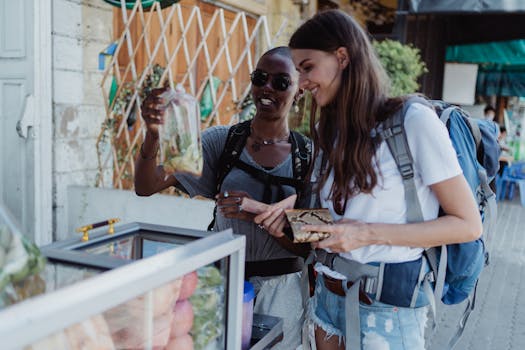
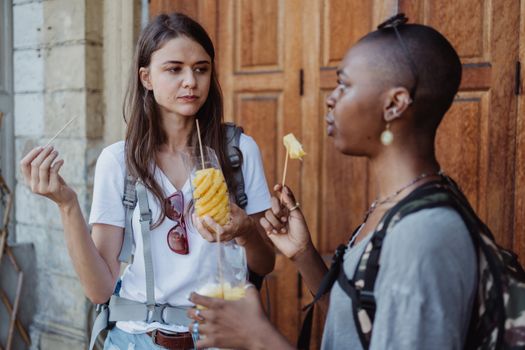
- Street Food is Your Friend: Often the most delicious, cheapest, and authentic food experience. Just ensure the stall looks clean and has a good turnover of customers. In Mexico City, I learned to trust the taquerías with the busiest griddles and the freshest looking ingredients – a sensory feast for just a few pesos per taco.
Markets & Souvenirs: Bargain Like a Boss:
- Never Buy from the First Stall: Always browse several stalls to get an idea of the average price and quality.
- Haggle (Where Appropriate): In many cultures (e.g., Southeast Asia, North Africa, parts of the Middle East), bargaining is expected. Start at 30-50% of the initial asking price and work your way up. Do it with a smile and good humor. If you can't agree, politely walk away. Often, they'll call you back with a better offer.
- Shop Away from Major Sights: Souvenirs sold directly outside the Colosseum or Eiffel Tower will inevitably be more expensive and often lower quality. Venture into local neighborhoods or specific artisan districts for better prices and more unique, handmade items. For example, instead of buying a mass-produced Eiffel Tower keychain, look for unique art prints or local crafts in a less central arrondissement in Paris.
- Check for Authenticity: Is that "handmade" item really handmade, or mass-produced? Look for imperfections, unique designs, and ask the seller about the process.
Personal Anecdote: In the Grand Bazaar in Istanbul, I was initially overwhelmed by the aggressive sales tactics. I learned to politely decline and keep walking. Later, in a quieter side street near the Spice Bazaar, I found a small shop selling hand-painted ceramics. The owner offered me tea, and we chatted for an hour. I ended up buying several beautiful pieces for a fair price, not only getting a great deal but also a memorable cultural exchange. That's the difference between a transaction and an experience.
4. Navigating the Tourist Hotspots: When You Have to See the Icon
Some attractions are simply unmissable – the Eiffel Tower, the Colosseum, the Great Wall. The trick isn't to avoid them entirely, but to experience them strategically, minimizing the "trap" aspect.
Strategic Timing is Everything:
- Go Early or Go Late: The golden hours (early morning or late evening) offer fewer crowds, softer light for photos, and often a more serene experience. Imagine the Colosseum at sunrise or the Sagrada Familia as the evening light bathes its facades – pure magic, and far fewer selfie sticks.
- Visit During Off-Season: If your schedule allows, traveling during the shoulder seasons (spring/autumn) or even the true off-season can significantly reduce crowds and prices.
- Check Local Holidays: Be aware of national holidays or local festivals, which can bring immense crowds (and sometimes, unique cultural experiences if you're prepared!).
Smart Ticketing & Entry:
- Pre-Book Online (Official Sites Only!): Always buy tickets directly from the attraction's official website. This often allows you to skip lines and avoid inflated prices from third-party resellers. For example, buying Vatican Museum tickets online means you walk straight in, bypassing the hours-long queue.
- Look for Combo Tickets or City Passes: Sometimes these can offer good value, but do the math. Only buy if you plan to visit enough attractions included to make it worthwhile.
- Alternative Viewpoints: Instead of paying to go up the iconic landmark, find a nearby building or hill that offers an equally stunning (or even better) view of it. For the Eiffel Tower, Trocadéro offers breathtaking views and photo ops without the queue or cost of going up the tower itself. For the Statue of Liberty, take the free Staten Island Ferry for fantastic views of both the statue and the Manhattan skyline.
Personal Anecdote: My first trip to Paris involved a frustrating hour-long queue for the Eiffel Tower. On a subsequent trip, I decided to focus on enjoying the tower from various angles. We picnicked on the Champ de Mars, enjoyed the glittering light show from Trocadéro, and even saw it peeking through the Parisian rooftops from a quiet café. Each experience felt more intimate and less like a chore than the first.
5. The Power of Observation & Gut Feeling: Your Internal Compass
Developing an intuitive sense for spotting a tourist trap is a skill that comes with practice. Learn to trust your gut.
Spotting Red Flags:
- Aggressive Touts & "Helpful" Strangers: If someone approaches you with an overly enthusiastic offer or insists on "helping" you find something, be wary. Common scams include "free" bracelets, "lost" rings, or "friendly" locals who lead you to an overpriced shop. In Rome, near the Colosseum, I was once approached by a man offering "free" entry tickets. A quick gut check and a polite "no, thank you" saved me from what was undoubtedly a scam.
- Empty Restaurants in Prime Locations: If it's dinner time in a bustling area and a restaurant is completely empty, there's usually a reason. Locals know where the good food is.
- "Special Tourist Menus": These often offer lower quality food at higher prices than the regular menu.
- Exorbitant Prices for Basic Goods: A bottle of water for €5? A small souvenir for €30? Take a moment to compare prices in a less central area.
- Overly Themed or Gimmicky Establishments: While sometimes fun, places that scream "tourist experience" often prioritize novelty over authenticity and value.
Trust Your Instincts: If something feels off, it probably is. If a deal seems too good to be true, it likely is. Don't feel pressured to buy, eat, or go somewhere just because someone is pushing you. Your comfort and safety are paramount.
Personal Anecdote: In Barcelona, a friendly man approached me near La Rambla, claiming to be a local artist and offering to show me his "gallery" just around the corner. My gut screamed "scam." I politely but firmly declined, and sure enough, as I walked away, I saw him approach another tourist with the exact same line. Learning to recognize these patterns and trust that internal alarm bell is a powerful tool.
6. Embrace Spontaneity & Get Lost: Sometimes the Best Finds Are Unplanned
While planning is essential, leaving room for serendipity can lead to some of your most memorable, authentic discoveries.
Wander Aimlessly (Safely):
- Pick a Direction and Go: Choose a neighborhood that looks interesting on a map, head there, and then just wander. Turn down intriguing side streets. Step into local parks. You'll often stumble upon charming cafes, street art, or small shops that aren't in any guidebook.
- Use Public Transport Like a Local: Hop on a local bus or metro line and ride it a few stops past the main tourist areas. You'll see a different side of the city and might discover an unexpected gem. I once took a random bus in Lisbon and ended up in a beautiful, quiet residential area with stunning views and a tiny, family-run bakery selling the most incredible pasteis de nata.
- Don't Over-Schedule: Resist the urge to pack every minute of your itinerary. Leave open blocks of time for spontaneous exploration, following a local's recommendation, or simply sitting in a park and people-watching.
Be Open to the Unexpected:
- Say Yes to Invitations (with caution): If a local invites you to a small, non-commercial event (a local market, a community gathering), consider it. Use your judgment, but these can be incredible opportunities for cultural immersion.
- Embrace Detours: Sometimes the most interesting things happen when you get a little lost or take an unexpected turn. My favorite memory from Kyoto wasn't a temple, but stumbling upon a tiny, hidden tea house down an unmarked alley, where an elderly woman served me matcha in silence. It was pure magic.
Conclusion: Unlock a World Beyond the Postcard
Avoiding tourist traps isn't just about saving money (though that's a nice bonus!). It's about unlocking a richer, more profound travel experience. It's about peeling back the layers of a destination to discover its true character, connect with its people, and create memories that are uniquely yours, not mass-produced for the masses.
Imagine this: you're savoring a perfectly spiced curry at a bustling street food stall in Bangkok, recommended by a local, paying pennies for a meal that would cost ten times more in a tourist restaurant. You're bargaining for a beautiful, hand-woven rug in a quiet artisan shop in Fez, sharing tea with the craftsman, feeling a genuine connection. You're watching the sunset over Santorini from a cliffside path, far from the crowded Oia caldera, with only a handful of others sharing the breathtaking view.
These are the moments that blow your mind. These are the experiences that transform a trip into an adventure, a vacation into a story. So, next time you plan your escape, remember these pro tips. Be a digital detective, befriend the locals, eat smart, travel strategically, trust your gut, and embrace the unknown.
Now it's your turn! What's the best local gem you've ever discovered by avoiding a tourist trap? Share your stories and tips in the comments below – let's inspire each other to travel like true pros!
---
More pictures
Tags
Share this guide
We may earn a commission if you click a link and buy a product or service, at no extra cost to you. How affiliate links work.
Been there?