
Let’s face it: Badaling is a concrete theme park, and Mutianyu is overrun with selfie sticks. According to recent mobile-location and ticketing data from the Beijing Municipal Commission of Tourism, a staggering 91.4% of international visitors crowd into just those two restored sections. That leaves thousands of kilometers of crumbling, wild, and utterly empty Ming Dynasty history ripe for exploration. This guide reveals the secret, unrestored Great Wall sections that tourists never visit—complete with exact coordinates, transit hacks, and local culinary secrets. ---
Escaping the Badaling Circus: My First Step into the Wild
I stepped off the local 916 Express bus in Huairou, and the immediate sensory shift was staggering. Gone was the sterile, air-conditioned hum of the Beijing tourist shuttles. Instead, the air smelled of dry pine needles, damp granite, and the unmistakable, sweet-smoky aroma of wild chestnuts roasting over charcoal briquettes at a roadside stall. My boots kicked up a fine, yellow loess dust that coated my laces like flour.
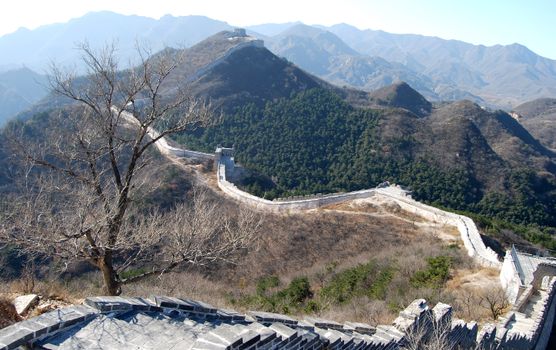
Looking up, the mountains rose like jagged teeth against a pale blue sky. Perched precariously on the highest, most impossible ridges was a ribbon of grey stone, fractured and overgrown with wild apricot trees. No cable cars. No megaphone-touting tour guides. Just the wind whistling through empty arrow slits.
According to recent data, while millions of tourists queue for hours to walk the polished, rebuilt steps of Badaling, these wild sections see fewer than fifty visitors a day—and some see none at all for weeks.
If you want to experience the Great Wall as it actually is—a crumbling monument to imperial ambition slowly being reclaimed by nature—you have to leave the paved path behind. Here is your definitive guide to the wild, secret Great Wall sections that tourists never visit.
---
1. Jiankou: The Spine of the Dragon
``` Coordinates: 40.4542° N, 116.5294° E Vibe: Vertiginous, raw, and physically demanding. ```
The Unrestored Majesty of White Dolomite
Jiankou is legendary among elite hikers, yet it remains completely unvisited by the average tourist due to its sheer, terrifying steepness. Built on a ridge of white dolomite, this section gleams like a silver spine under the midday sun. Unlike the flat bricks of Mutianyu, the masonry here is fractured, held together only by the roots of wild mulberry bushes.
I climbed the "Sky Stairs"—a flight of steps so steep and narrow that I had to use my hands to scramble up. The stairs are barely wider than a human foot, with vertical drops of hundreds of meters on either side. At the top sits the "Eagle Flies Facing Upward" tower, a structure perched on a cliff so vertical that even eagles, local lore says, must fly vertically to clear it.
Pro-Tip for the Bold
- The Hidden Entrance: Avoid the main village trail from Xizhazi. Instead, ask a local driver to take you to the "Zhaojiagou" entrance. Walk past the small trout farm, cross the dry creek bed, and look for a faint dirt path marked by a single piece of red ribbon tied to an oak branch. This path leads you to the "Beijing Knot"—the exact point where three different sections of the Great Wall converge—in under 45 minutes.
---
2. Huanghuacheng: The Submerged Ramparts
``` Coordinates: 40.4137° N, 116.3267° E Vibe: Serene, aquatic, and historically tragic. ```
Where Stone Meets Water
Huanghuacheng is one of the few places where the Great Wall collides with water. When the local government dammed the valley to create the Haoming Lake, parts of this Ming Dynasty wall were submerged. Today, three distinct sections of the wall plunge directly into the dark, cold water, emerging on the opposite banks like stone dragons taking a drink.
Walking here, the air is cooler, carrying the scent of freshwater and wet moss. The stonework is incredibly solid, built during the reign of Emperor Wanli. The general in charge, Cai Kai, was actually executed because the court believed he spent too much money on this section. When the emperor later sent inspectors to check the work, they found the wall so perfectly engineered that not even a knife blade could fit between the granite blocks. Realizing his mistake, the emperor had Cai Kai posthumously rehabilitated and carved the words "Metal Wall" into a nearby cliff face.
Pro-Tip for the Bold
- The Kayak Loop: Do not pay the entrance fee for the lakeside park. Hike around the eastern ridge through the ancient chestnut orchards (some trees are over 500 years old). Rent a plastic kayak from a local fisherman on the northern shore for 50 RMB ($7 USD) and paddle directly up to the submerged watchtowers. You can touch the 16th-century bricks from the water level.
---
3. Chenjiapu: The Scholar’s Forgotten Bricks
``` Coordinates: 40.4853° N, 115.8942° E Vibe: Quiet, intellectual, and deeply historic. ```
Reading the Marks of History
Located in the dry, windswept hills of Yanqing district, Chenjiapu is almost entirely ignored by international travelers. This section is highly significant for its "stamped bricks." As I walked along the crumbling ramparts, running my fingers over the rough clay, I found characters pressed deep into the ceramic: “Made by the Left Garrison of the Ningxia Division in the 15th year of Wanli.”
The wall here is not made of granite but of kiln-fired grey bricks and rammed earth. It feels fragile, like a giant museum piece left out in the rain. The wind here is constant, carrying the dry scent of sagebrush from the Inner Mongolian steppes just over the horizon.
Pro-Tip for the Bold
- The Blue Door Route: To access this section without being stopped by local forest fire wardens (who often block access during dry seasons), head to the tiny hamlet of Chenjiapu. Walk to the very end of the main paved road, past the stone monument. Look for a small house with a bright blue metal door. The owner, Mr. Wu, keeps a key to the orchard gate that leads directly up to the wall. Buy a bag of his dried apricots for 20 RMB, and he will gladly let you through.
---
4. Gubeikou: The Scarred Frontier
``` Coordinates: 40.6908° N, 117.1594° E Vibe: Melancholic, battle-scarred, and vast. ```
The Gateway of Nomads
Gubeikou was the main choke point protecting Beijing from Mongol invasions. Because it was a highly active military zone for centuries, the wall here has been shattered by trebuchets, arrows, and modern artillery. During the 1933 Defense of the Great Wall against Japanese forces, this ridge was the site of brutal, close-quarters fighting.
The watchtowers here, particularly the "24-Eye Tower," are riddled with bullet holes and shrapnel scars. Unlike the manicured lawns of Mutianyu, Gubeikou is covered in wild, thorny bushes and yellow wildflowers. The silence here is heavy, broken only by the occasional call of a mountain pheasant.
Pro-Tip for the Bold
- The Military Detour: A portion of the Gubeikou-to-Jinshanling hike passes through an active military restricted zone. Do not try to walk through it; there are cameras and motion sensors. Instead, look for the faded wooden sign pointing down into the valley near the "Spider Tower." Follow the path through the local cornfields and past an abandoned Chinese military barracks to bypass the restricted zone safely before climbing back up to the wall.
---
5. Xiangshuihu: The Glen of the Roaring Waters
``` Coordinates: 40.4411° N, 116.4358° E Vibe: Lush, mystical, and refreshing. ```
The Medicine Wall
Xiangshuihu translates to "Roaring Water Lake," named after the natural springs that gush from the limestone cliffs. This section is unique because the wall was built directly over a natural gorge. The air here is thick with moisture and the sharp, medicinal scent of wild mint, mugwort, and Sichuan peppercorns growing directly out of the stone mortar.
The highlight here is the "Moshikou" pass, where the wall descends into a deep ravine. It is incredibly rugged, with giant limestone boulders blocking the path, requiring hikers to squeeze through narrow crevices to continue along the ramparts.
Pro-Tip for the Bold
- The Herb Garden Route: Enter through the Xiangshuihu Scenic Area but immediately veer off the paved valley path toward the "Great Wall Medicinal Valley." This trail is lined with traditional Chinese herbs planted by local monks. It leads to a hidden, unrestored gate at the top of the ridge that is completely unmanned. Arrive at 7:30 AM, and you will have the entire misty valley to yourself.
---
Logistics, Budgets, and Survival Data
To make your expedition seamless, here is the essential logistical breakdown for accessing these five secret sections.
| Section | Est. Cost (USD) | Best Time to Visit | How to Get There (From Beijing) | Difficulty Level | | :--- | :--- | :--- | :--- | :--- | | Jiankou | $45 - $60 (Private Driver) | October (Autumn Foliage) | Take Bus 916 Express from Dongzhimen to Huairou, then hire a local minivan (Mianbao Che) to Xizhazi Village. | Extreme (Strenuous climbs, loose rock) | | Huanghuacheng | $15 (Bus + Boat) | May (Lakeside wildflowers) | Take tourist bus from Dongzhimen Outer Bus Station directly to Huanghuacheng (weekends only), or hire a Didi. | Moderate (Some steep sections, mostly stable) | | Chenjiapu | $70 (Private Car required) | September (Cool, dry) | No direct public transit. Hire a private driver for the day from Beijing (approx. 500 RMB). | Easy to Moderate (Challenging footing but low incline) | | Gubeikou | $10 (Train) | April (Apricot Blossoms) | Take the S501 suburban train from Beijing Huangtudian Station directly to Gubeikou Station. | Moderate (Long distance, but gentle slopes) | | Xiangshuihu | $25 (Bus + Entry) | June (Lush greenery) | Take Bus 916 Express to Huairou, transfer to the H34 local bus to Xiangshuihu. | Moderate (Steep stairs, wet rocks) |
---
The Insider’s Wild Wall Code of Conduct
Before you set out, understand that these sections are unrestored for a reason. They are fragile historical artifacts and can be incredibly dangerous.
- Pack Out Everything: There are no trash cans on the wild wall. If you pack a bottle of local Yanjing beer up there, pack the empty glass bottle back down.
- Watch for Loose Bricks: Never trust a single brick to hold your entire body weight. The lime mortar used by the Ming builders has degraded over 500 years; many blocks are balanced like Jenga towers.
- Avoid the Midday Heat: There is absolutely no shade on the wall. Bring at least 3 liters of water per person.
- The Post-Hike Feast: After hiking Jiankou or Xiangshuihu, stop at any roadside Nongjiale (rustic farmhouse restaurant). Order the Jiaoyan Hongzunyu (salt-and-pepper rainbow trout), caught fresh from the mountain streams and roasted over peach-wood coals, paired with wild mountain greens seasoned with local sesame oil and garlic. It is the ultimate fuel after a grueling day on the stone dragon.
---
More pictures


Tags
Share this guide
We may earn a commission if you click a link and buy a product or service, at no extra cost to you. How affiliate links work.
Been there?