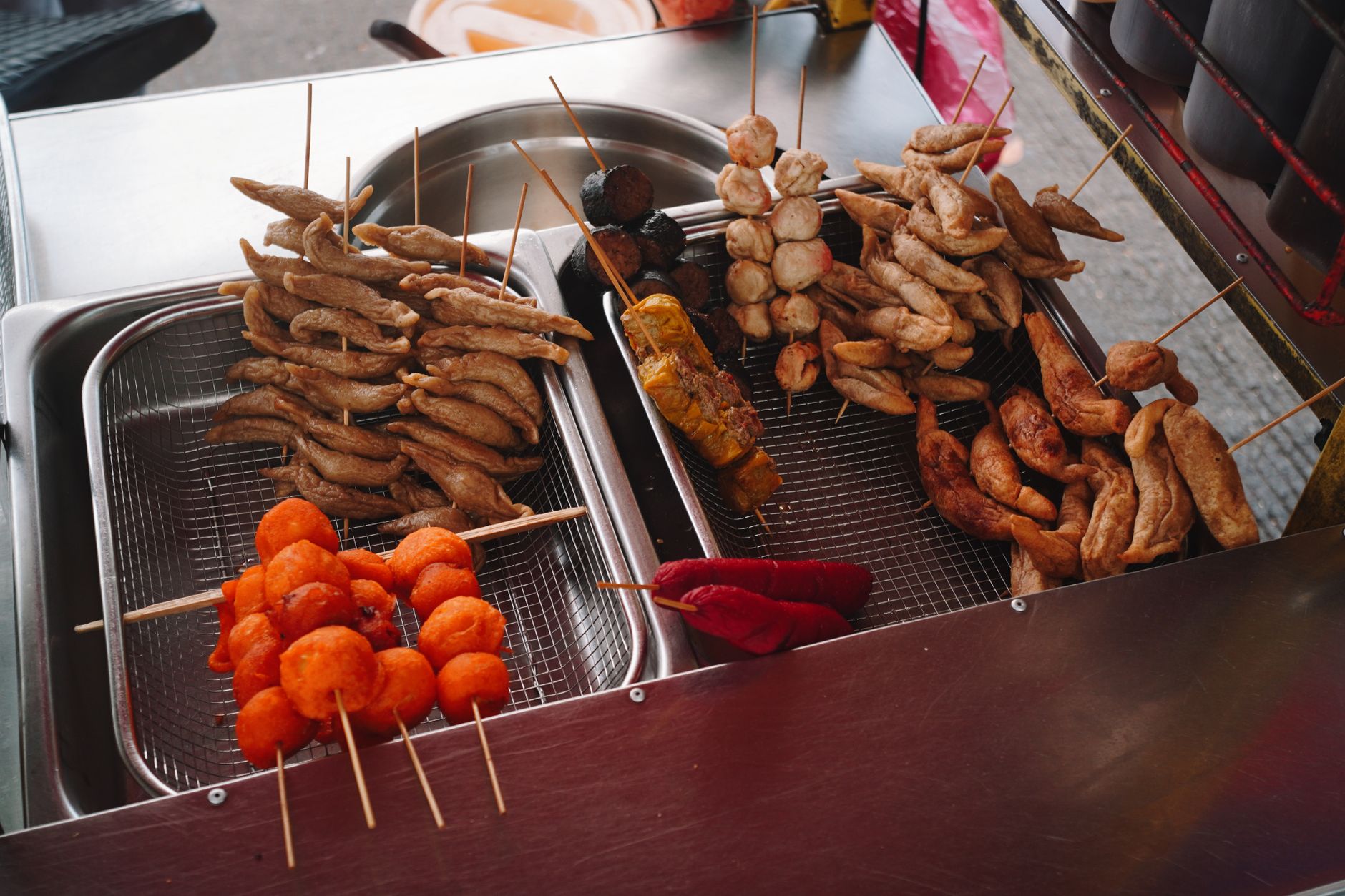
Prepare for a culinary plot twist! We're diving deep into the world of foods that cleverly disguise themselves as sweet desserts but are, in fact, gloriously savory. These are the delicious secrets locals often keep to themselves, and you're about to get the inside scoop on how to find them. --- ##
The Sweetest Deception: Uncovering the World's Savory "Desserts" Locals Don't Want You to Know About
I’ll never forget the look on my face. It was a sweltering afternoon in Kyoto, and I was wandering through Nishiki Market, a sensory overload of sights, sounds, and incredible smells. My sweet tooth was acting up, and my eyes landed on a stall selling what looked like perfectly grilled, glossy mochi balls on a skewer, glistening with an amber syrup. "Ah, dango!" I thought, picturing the sweet, chewy treat I’d adored in countless anime. I excitedly pointed, paid my ¥200, and took a big, anticipatory bite.
My brain registered sweet. My tongue registered… soy sauce? And something else. Something umami. My brow furrowed. Was this a trick? Was it a mistake? I took another bite, slower this time. The chewiness was there, the slight char from the grill, but the "syrup" was distinctly savory-sweet, a rich blend of soy, mirin, and sugar. It wasn't the pure sugary bliss I’d expected, but it was delicious. It was Mitarashi Dango, and it was my first glorious encounter with a food that looked like a dessert but was, in fact, a savory masterpiece.
That moment sparked an obsession. What other culinary imposters were out there? What other "desserts" were secretly savory, waiting to surprise and delight my taste buds? Over years of travel, I’ve uncovered a treasure trove of these deceptive delights – dishes so cleverly disguised, so perfectly presented, that you’d swear they belonged on a dessert platter. These are the authentic, mind-bending flavors that locals often guard with a subtle smile, the culinary secrets that truly immerse you in a culture. And today, I’m spilling the beans. Get ready to challenge your taste buds and embark on a delicious adventure into the world of savory "desserts" that are anything but sweet!
---
1. Japan's Umami Skewers: Mitarashi Dango
Let's start where my journey began, with the enchanting Mitarashi Dango. These plump, chewy rice flour dumplings (mochi) are skewered, lightly grilled, and then generously coated in a thick, glossy, amber-colored sauce. Visually, they scream "sweet treat!" – perfect for an Instagram story with a scenic Japanese backdrop. But that's where the deception begins.
The magic of Mitarashi Dango lies in its sauce: a perfectly balanced concoction of soy sauce, sugar, mirin (sweet rice wine), and starch. The result is a deeply savory-sweet glaze that hits all the right notes – salty, sweet, and packed with umami. The slight char from the grill adds a smoky depth to the soft, bouncy mochi. It’s comforting, satisfying, and utterly addictive.
My Experience: I've since sought out Mitarashi Dango everywhere from bustling street markets in Tokyo's Asakusa district to quiet tea houses in Nara. Each time, the initial visual expectation of a sweet dessert is delightfully shattered by that first savory-sweet bite. It’s a perfect snack after exploring a temple or a quick pick-me-up while shopping.
Where to Find It: Look for street food stalls near temples (especially in Kyoto and Nara), traditional wagashi (Japanese confectionery) shops, and the incredible depachika (department store food halls) across Japan. Price Range: Expect to pay ¥100-300 per skewer. Tripsora Tip: Don't be afraid to try different stalls! The sauce recipe can vary slightly, offering subtle differences in the sweet-savory balance. Snap a pic of the glossy skewers against a traditional Japanese backdrop for ultimate shareability!
---
2. The Philippines' Fluffy Impostor: Puto with Cheese & Salted Egg
Imagine a tray of perfectly steamed, fluffy white cupcakes, some topped with a vibrant slice of orange cheese, others with a delicate sliver of salted duck egg. You'd think "dessert!" right? Wrong. Welcome to the world of Puto, the Philippines' delightful steamed rice cakes that are a staple for breakfast or a savory snack.
Puto are made from slightly fermented rice flour, giving them a subtle tang and an incredibly soft, airy texture. While plain Puto can be subtly sweet, the most popular and arguably most deceptive versions are those crowned with savory toppings. The sharp, salty cheddar cheese melts slightly from the residual heat, creating a creamy contrast. The salted egg adds an intense burst of umami and a unique, slightly grainy texture.
My Experience: During a trip to Manila, I stumbled upon a bustling karinderya (local eatery) with a vibrant display of food. These little white "cupcakes" caught my eye. I ordered one, thinking it was a light, sweet snack. The first bite, with the salty cheese melting into the soft rice cake, was a revelation. It was so simple, yet so profoundly satisfying. I quickly learned that Puto is often served alongside savory dishes like dinuguan (pork blood stew) or pancit (noodles), acting as a delicious, absorbent counterpoint rather than a sugary ending.
Where to Find It: Widely available in local wet markets, street food stalls, Filipino bakeries, and karinderyas throughout the Philippines. Price Range: Typically ₱10-30 per piece, depending on size and topping. Tripsora Tip: For the full experience, try both the cheese and salted egg versions. They offer distinct flavor profiles. Puto is incredibly photogenic with its pristine white color and colorful toppings!
---
3. India's Golden Sponge: Dhokla / Khaman
Picture a bright yellow, airy sponge cake, perfectly cut into squares, often adorned with a sprinkle of green herbs and tiny black seeds. If you saw this on a platter, your dessert radar would be blaring, right? But in India, particularly in the state of Gujarat, this is Dhokla or Khaman – a beloved savory steamed cake that's light, tangy, and utterly delicious.
Made from fermented chickpea flour (besan), Dhokla has a unique, slightly sour tang from the fermentation, balanced with a tempering of mustard seeds, curry leaves, and green chilies. It's steamed, resulting in an incredibly soft, spongy texture that practically melts in your mouth. Some versions are soaked in a light sugar syrup infused with lime, adding another layer of complex sweet-sour-savory notes without making it a true dessert.
My Experience: My first encounter with Dhokla was at a breakfast buffet in Ahmedabad. I loaded my plate, thinking it was a sweet cake. One bite, and I was hooked. The lightness, the gentle spice, the refreshing tang – it was completely unexpected and utterly delightful. It felt like a culinary magic trick. I later learned it's a popular breakfast item, often served with chutney, proving its savory credentials.
Where to Find It: Ubiquitous in Gujarat, you'll find Dhokla and Khaman at sweet shops (which often sell savory snacks too!), street food stalls, and breakfast eateries across India. Price Range: Around ₹30-80 for a plate. Tripsora Tip: Look for the freshest batches, often made in large steam trays and cut on the spot. Capture its vibrant yellow hue and delicate texture for your feed!
---
4. Vietnam's Steamed Secret: Bánh Giò
Imagine unwrapping a perfectly formed, pyramid-shaped package, intricately folded in banana leaves. Your mind might drift to sweet sticky rice cakes or tropical fruit jellies. But peel back the layers of a Bánh Giò in Vietnam, and you’ll discover a savory, comforting surprise.
This traditional Vietnamese dumpling consists of a soft, gelatinous rice flour dough encasing a rich, savory filling of seasoned minced pork, wood ear mushrooms, shallots, and sometimes quail eggs. It’s steamed until piping hot, creating a wonderfully tender and aromatic parcel. The banana leaf imparts a subtle, earthy fragrance that enhances the entire experience.
My Experience: Walking through the narrow alleys of Hanoi's Old Quarter on a cool morning, I saw a vendor selling these leaf-wrapped parcels. Intrigued by their elegant shape, I bought one, half-expecting a sweet sticky rice treat. Unwrapping it was like opening a culinary present. The steam wafted up, revealing the glistening, soft dough and the fragrant, savory filling. It was hearty, warm, and deeply satisfying – a perfect antidote to the morning chill, and definitely not a dessert!
Where to Find It: Primarily a breakfast or mid-morning snack, Bánh Giò is found at street food stalls, local markets, and small eateries throughout Vietnam, especially in Hanoi. Price Range: Approximately ₫15,000-25,000. Tripsora Tip: Enjoy it warm! The texture and flavors are best when freshly steamed. Try to get a shot of the beautifully wrapped parcel before you unveil its savory secret.
---
5. China's Comforting Cake: Lo Bak Go (Pan-Fried Radish Cake)
At a bustling dim sum restaurant, the carts roll by, laden with steamed buns, fried dumplings, and what looks like dense, pale squares of cake, often pan-fried to a golden crisp. You might easily mistake this for a plain sweet cake or even a dense brownie. But this is Lo Bak Go, or Pan-Fried Radish Cake, a quintessential savory dish in Cantonese cuisine.
Made from grated daikon radish, rice flour, and often studded with savory morsels like dried shrimp, Chinese sausage (lap cheong), and mushrooms, Lo Bak Go is first steamed into a dense loaf, then sliced and pan-fried until beautifully crisp on the outside and wonderfully soft and savory on the inside. The radish itself has a subtle sweetness but is primarily earthy and umami-rich, especially when combined with the other ingredients.
My Experience: My first dim sum experience in Hong Kong was overwhelming in the best way. A friendly server pushed a cart with these golden-brown squares. I pointed, thinking it was a simple, perhaps slightly sweet, cake. One bite, and the savory explosion hit me – the crispy edges, the soft, almost custardy interior, and the irresistible flavors of dried shrimp and Chinese sausage. It wasn't just a cake; it was a symphony of savory delights, perfectly accompanied by a dab of chili sauce.
Where to Find It: A staple at virtually all dim sum restaurants in Hong Kong, Macau, Southern China, and Chinatowns worldwide. You can also find it at some street food stalls. Price Range: HK$20-40 for a plate at dim sum. Tripsora Tip: Ask for it pan-fried (jian in Mandarin, zin in Cantonese) for the best crispy-on-the-outside, soft-on-the-inside texture. It's a fantastic dish to capture with its golden crust.
---
6. Korea's Egg-cellent Muffin: Gyeranppang (Egg Bread)
Imagine a fluffy, golden-brown muffin or a small loaf of bread, perfectly baked and looking utterly inviting. Your mind automatically jumps to sweet, right? Maybe a corn muffin, or a plain sweet bread. But in Korea, if you pick up a Gyeranppang, you're in for an 'egg-cellent' surprise.
Gyeranppang, literally "egg bread," is a popular street food snack that perfectly blends sweet and savory. While the bread itself is slightly sweet and fluffy, the star of the show is the whole, perfectly cooked egg baked right into the center of each piece. Sometimes, you'll find a sprinkle of parsley or even a slice of ham or cheese alongside the egg for an extra savory kick.
My Experience: Wandering through the vibrant street food stalls of Myeongdong in Seoul on a chilly evening, the warm, slightly sweet aroma of freshly baked Gyeranppang was irresistible. I bought one, expecting a sweet, comforting bread. The first bite into the soft, sweet dough was lovely, but then my teeth met the creamy, savory yolk of a perfectly cooked egg. It was a delightful contrast – the ultimate sweet-savory combo, a warm hug in bread form. It instantly became one of my go-to street snacks.
Where to Find It: Abundant at street food stalls across South Korea, especially in popular areas like Myeongdong, Hongdae, and Insadong in Seoul, and Nampo-dong in Busan. Price Range: Typically ₩1,000-2,000 per piece. Tripsora Tip: These are best enjoyed warm, right off the griddle. They're incredibly Instagrammable, especially if you can get a shot of the golden bread with the egg peeking out!
---
7. Italy's Golden Balls of Joy: Arancini
Last but certainly not least, let's head to the sunny shores of Sicily, Italy. Here, you'll find golden, fried balls or cones that, to the untrained eye, might resemble large donut holes, sweet fritters, or even a type of pastry. But bite into an Arancino (the singular form of arancini), and you'll discover a rich, savory heart.
Arancini are glorious fried rice balls, typically made with creamy risotto rice (often flavored with saffron for that iconic golden hue), which is then stuffed with various savory fillings. The most classic is ragù (a rich meat sauce, peas, and mozzarella), but you'll also find versions with ham and cheese (burro), spinach, or even pistachio. They're breaded and deep-fried until golden and crispy.
My Experience: My first visit to Palermo was a culinary whirlwind. I saw these beautiful, golden spheres everywhere. Thinking they were some kind of sweet, fried pastry, I eagerly bought one from a tavola calda. The moment I bit through the crunchy exterior into the warm, saffron-infused rice and discovered the rich, meaty ragù and gooey mozzarella, my idea of Italian "desserts" was instantly shattered. It was a complete meal in a ball, and utterly delicious. My palate had been thoroughly tricked, and I loved it.
Where to Find It: A quintessential Sicilian street food, Arancini are found at tavola calda (casual eateries), bakeries, and street food vendors throughout Sicily, particularly in Palermo and Catania. Price Range: Approximately €2-4 per piece. Tripsora Tip: Always ask about the filling before you buy! There's a huge variety. For a classic shot, capture the golden exterior with a glimpse of the rich filling inside.
---
Your Passport to Savory Surprises: Practical Tips for the Adventurous Eater
Ready to embark on your own "dessert but not dessert" quest? Here are some actionable tips to help you uncover these delightful culinary deceptions:
- Embrace the Unknown: The biggest barrier is often your own expectation. Approach new foods with an open mind and palate. If it looks interesting, try it!
- Ask (Politely!): Don't be afraid to ask vendors if a dish is sweet or savory, even if there's a language barrier. Pointing and making a questioning gesture, or using a translation app for "sweet?" or "savory?", can go a long way. Locals appreciate your curiosity.
- Observe Local Habits: Pay attention to when and how locals eat a particular dish. Is it served with breakfast? As a side dish? That's a strong indicator it might not be a dessert.
- Follow the Crowds: Long queues at a street food stall usually mean something delicious is being served. Don't be shy; join the line!
- Check for Savory Clues: Look for common savory garnishes like fresh herbs (cilantro, parsley), spices (mustard seeds, chili flakes), or savory toppings (cheese, meat bits) on visually sweet-looking items.
- Budget for Bites: Street food is usually incredibly affordable, making it easy to sample many different items without breaking the bank. Factor in a small budget for adventurous eating.
- Instagram It! These deceptive dishes are prime content for your social media. Capture the initial "dessert" look, then the reveal of its savory interior. Use relevant hashtags like #FoodDiscovery #TravelFood #SavorySurprise #TripsoraEats.
- Allergies & Dietary Needs: If you have allergies, always exercise caution. While "sweet or savory" is a fun game, knowing ingredients is crucial. Have a translation app ready for key allergens.
---
The Sweetest Reward is the Unexpected
My journey into the world of savory "desserts" has been one of the most exciting aspects of my travels. It’s a constant reminder that culinary boundaries are often just expectations, waiting to be delightfully shattered. These are more than just snacks; they're cultural insights, windows into local palates, and a testament to human ingenuity in the kitchen.
So, the next time you're wandering through a foreign market or peering into a bustling eatery, and you spot something that looks undeniably like a sweet treat, pause. Take a closer look. Ask a question. You might just uncover a savory secret that locals have been hoping you wouldn't find, and it might just become your new favorite culinary obsession.
Now it's your turn! Have you ever been deliciously deceived by a food that looked like a dessert but was surprisingly savory? Share your stories and photos with us using #TripsoraSavorySecrets and tag @TripsoraOfficial on Instagram! Let's inspire each other to dive deeper into the world's hidden culinary gems!
---
More pictures



Tags
Share this guide
We may earn a commission if you click a link and buy a product or service, at no extra cost to you. How affiliate links work.
Been there?