
Skip the suffocating crowds of Paris and the eye-watering prices of Vienna. Top architectural historians and seasoned urban preservationists are redirecting their focus eastward. From the iridescent ceramic-tiled palaces of Vojvodina to the hyper-stylized Art Nouveau boulevards of the Baltics, Eastern Europe houses some of the most daring, ornate, and pristine architectural masterworks on Earth—at a fraction of the cost. Here is your definitive, expert-backed guide to the eastern structures that leave Western Europe in the shade. ---
Beyond Paris and Vienna: The Great Architectural Shift East
I stepped off the sleeper train into Subotica at 6:15 AM as a cool, lavender mist clung to the cobblestones. The air didn't smell like the diesel exhaust of London or the stale croissants of Paris metro stations; it smelled of dark roasted espresso, woodsmoke, and baking burek dough.
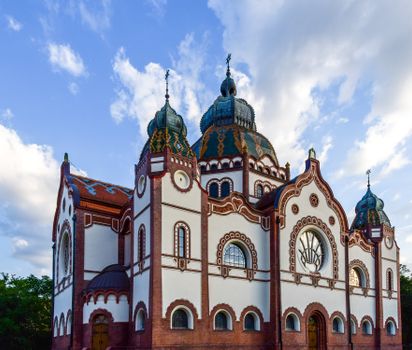
Then I looked up. Looming over the deserted square was the Raichle Palace—a hallucinatory outburst of cobalt-blue ceramic hearts, swirling pastel plaster, and exaggerated roof curves that looked less like an early 20th-century home and more like a dragon’s jewel box materialized from a folklore scroll.
For decades, the global architectural narrative pushed a predictable canon: if you wanted High Gothic, you went to Chartres; for Baroque, you booked Rome; for Art Nouveau, you braved the tourist swarms on Hausmannian avenues. But architectural historians are breaking rank. Eastern Europe holds an astonishing repository of uncompromised structural genius—unfiltered by mass tourism, preserved by complex geopolitical histories, and built by visionaries who took Western forms and injected them with bold local identities.
Here are the six Eastern European architectural hubs rivaling Western icons, complete with insider logistics to help you experience them before the crowds arrive.
---
1. The Secessionist Masterpieces: Subotica (Serbia) & Oradea (Romania)
While Paris engineered sleek ironwork, the Austro-Hungarian borderlands unleashed Hungarian Secessionism—a explosive branch of Art Nouveau defined by organic shapes, folk motifs, and weather-resistant Zsolnay ceramic tiles that shimmer like beetle wings.
``` +-----------------------------------------------------------------------+ | ARCHITECTURAL HIGHLIGHT: Zsolnay Ceramics | | Produced in Pécs, these iridescent glaze ceramics gave buildings | | self-cleaning, jewel-toned exterior skins that haven't faded in 120 | | years. | +-----------------------------------------------------------------------+ ```
Subotica, Serbia
In Subotica, architect Ferenc Raichle didn't just design structures; he sculpted fantasies. The Raichle Palace (1904) utilizes floral mosaics, hand-forged iron gates shaped like peacock feathers, and undulating rooflines that spit in the face of classical symmetry. Nearby, the massive Subotica Town Hall dominates the city center, its interior wrapped in stained glass windows depicting historic Hungarian kings illuminated by massive hand-carved chandeliers.
- Pro-Tip: Walk into the Town Hall courtyard at precisely 11:00 AM. Sunlight hits the interior stained glass galleries at an angle that projects hyper-saturated stained-glass patterns across the mosaic floors.
- The Hidden Angle: Skip the main facade of the Raichle Palace; head into the inner courtyard garden cafe (Kafana Raichle) to see the original ceramic tile chimneys, usually closed to tour groups.
Oradea, Romania
A three-hour drive across the border brings you to Oradea, an open-air museum of Secessionist design. The Black Eagle Palace (Palatul Vulturul Negru) features a curved glass shopping arcade that rivals Milan’s Galleria Vittorio Emanuele II, but with dramatic, moody stained glass depicting eagles in mid-flight rather than commercial retail logos.
- Pro-Tip: Locate the small wooden door next to the pharmacy on Str. Independenței. It leads to the interior staircase of the Moskovits Miksa Palace, featuring original turquoise ironwork railings shaped like lotus stems.
---
2. Jože Plečnik’s Urban Alchemy: Ljubljana, Slovenia
If Barcelona belongs to Antoni Gaudí, Ljubljana belongs entirely to Jože Plečnik. After shaping Prague Castle and working in Vienna, Plečnik returned to Slovenia’s capital in the 1920s to execute one of the most cohesive urban redesigns in modern history.
Plečnik did not blindly copy Greco-Roman antiquities. He took classical elements—columns, obelisks, classical pediments—and reinterpreted them using everyday local materials like concrete, local red brick, and River Ljubljanica stone.
The Key Monuments
- National and University Library: The building’s facade is constructed from rough-hewn stone blocks mixed with recycled red bricks, symbolizing the raw intellect of students refined by study. The entrance portal features a pitch-black marble staircase leading upwards toward a sunlit reading room—a deliberate architectural allegory for passing from ignorance into enlightenment.
- The Triple Bridge (Tromostovje): Instead of expanding a bottlenecked central bridge, Plečnik added two diagonal pedestrian bridges flanking the original, creating a fan-like plaza that turns a simple river crossing into an urban stage.
``` [Left Pedestrian Bridge] \ [Main Traffic Bridge] ====> Redesigned into unified pedestrian plaza / [Right Pedestrian Bridge] ```
- Pro-Tip: Skip the crowded afternoon cafes at the river level. Book a morning pass to the National Library Reading Room (5 EUR). The acoustic design and custom-designed brass study lamps create a quiet, surreal atmosphere found nowhere else in Central Europe.
---
3. The Brick Gothic & Avant-Garde Concrete: Wrocław, Poland
Wrocław offers an architectural layer cake unmatched in Western Europe: German Gothic brickwork seamlessly blended with Prussian Neoclassical and early 20th-century Modernism.
Gothic Masterwork: St. Elizabeth’s & The Market Square
Wrocław’s Rynek (Market Square) is framed by colorful burgher houses, but the true hero is the Old Town Hall (Stary Ratusz). Built over 250 years, it exhibits Flamboyant Gothic tracery, asymmetric gables, and detailed stone grotesques caricaturing medieval civic life.
The Concrete Revolution: Centennial Hall (Hala Stulecia)
Built by Max Berg in 1913, this UNESCO World Heritage site was an engineering gamble that horrified traditionalists. Constructed entirely of reinforced ferro-concrete, its massive dome was the largest in the world at the time of completion (42 meters in diameter), predating Rome's Pantheon in sheer open-span concrete scale.
``` Max Berg's Centennial Hall Dome Architecture (1913) _____________________________ .-' '-. .' ___ ___ ___ ___ ___ ___ '. <-- Concentric stepped rings / | | | | | | | | | | | | \ | |___| |___| |___| |___| |___| |___| | <-- Ribbed glass clerestory |==========================================| <-- Reinforced concrete ring beam | / \ / \ / \ / \ / \ | |___/___\___/___\___/___\___/___\___/___\__| <-- Arched load-bearing piers ```
- Pro-Tip: To take photographical justice of the Centennial Hall's scale, enter during the morning maintenance hours (8:00 AM - 9:30 AM). The light cuts through the upper clerestory windows in concrete shafts, illuminating suspended dust particles like a sci-fi cathedral.
- Insider Route: Cross the Tumski Bridge to Ostrów Tumski (Cathedral Island) at sunset. A local lamplighter in a traditional cloak still manually lights the city’s 90+ real gas lamps using a long flame pole.
---
4. The World Capital of Eclectic Art Nouveau: Riga, Latvia
Vienna has the Secession Building; Paris has its Metro entrances. But Riga contains the highest concentration of Art Nouveau (Jugendstil) architecture in the world, covering over one-third of its entire city center.
When industrial prosperity exploded in the late 19th century, Riga tore down its medieval fortifications and built outwards. Local architects, led by the wild imagination of Mikhail Eisenstein, turned apartment building facades into vertical canvases of classical myths, scream masks, sphinxes, and soaring geometric shapes.
The "Quiet Center" Walking Route
Focus your architectural lens on Alberta Iela and Elizabetes Iela:
- Alberta Iela 2a: Designed by Eisenstein, this building features two towering sphinxes guarding the entrance, topped by a blue glass tile upper floor that reflects the sky, giving the building an illusion of floating.
- Elizabetes Iela 10b: A masterpiece of Eclectic Art Nouveau featuring massive plaster faces staring down at passersby, frame-like vertical columns, and soft sea-green ceramic tile inserts.
``` +-----------------------------------------------------------------------+ | ARCHITECT'S NOTE: National Romanticism | | Look closely at Riga's facades. Alongside European Nouveau, you'll | | spot Latvian National Romanticism—stiff oak leaf motifs, geometric | | folk weaves, and trapezoidal door frames inspired by ancient Baltic | | timber huts. | +-----------------------------------------------------------------------+ ```
- Pro-Tip: Head into the Riga Art Nouveau Museum (Alberta Iela 12). Don't just look at the exhibits—look straight up in the central stairwell. It features a spiraling frescoed ceiling that is arguably the most photographed staircase in Northern Europe. Visit at 8:15 AM to shoot it empty before museum doors officially open.
---
5. Ottoman Timber Syncretism: Plovdiv, Bulgaria
While Western architecture focused on stone, mortar, and steel, Plovdiv developed a completely unique vernacular during the 18th and 19th centuries: Bulgarian National Revival Architecture.
Perched on six granite hills in Thrace, Plovdiv’s Old Town features cantilevered wooden mansions that overhang the narrow, cobbled streets. Built by wealthy merchants trading across the Ottoman Empire, these structures fused Balkan wooden craftsmanship with Ottoman spatial layouts and Western Baroque wall frescoes.
The Architectural Blueprint
- Symmetrical Plan: Houses were built around a central oval hall (Salon) illuminated by skylights.
- Upper Floor Overhangs (Erker): Upper stories extend outward over the street supported by curved timber brackets, maximizing living space while keeping the street shaded.
- Frescoed Exterior Facades: Outer walls are painted in deep indigo, ochre, or terracotta reds, decorated with floral sgraffito plasterwork and painted faux-columns.
Key Example: Hindliyan House
Built in 1835, the Hindliyan House features an interior complete with a functioning indoor fountain that trickled rosewater to perfume the air for guests, along with painted wall panels depicting landscapes of Istanbul, Venice, and Alexandria.
- Pro-Tip: Stand at the intersection of Str. Canko Curyatkov and Str. Stamat Matanov. From this precise angle, three separate cantilevered mansions overlap in the air, almost entirely blocking out the sky in a puzzle of painted wood and plaster.
---
6. Central European Baroque Without the Crowds: Olomouc, Czechia
Prague gets the glory; Olomouc gets the preservation. This Moravian city contains the second-largest historic preservation zone in the Czech Republic, dominated by dramatic High Baroque monuments built after the Thirty Years' War.
The Holy Trinity Column
Standing 35 meters high, the Holy Trinity Column is a UNESCO-listed triumph of Moravian Baroque. It isn't just a statue; it’s a self-contained chapel carved entirely from local sandstone.
- Architectural Scale: The monument holds 18 statues of saints, 12 light-bearer relief panels, and 6 apostles in relief. A gilded copper sculpture of the Holy Trinity sits at its peak.
- The Hidden Chapel: Inside the base of the column lies a tiny stone chapel with remarkable interior acoustics.
``` [Gilded Holy Trinity Sculpture] | [35-Meter Sandstone Shaft] | [Upper Tier: Saints & Archangels] | [Lower Tier: Apostles & Relief Panels] | [Base Level: Accessible Inner Stone Chapel Door] ```
- Pro-Tip: Skip the main square lunch spots. Walk to the Archdiocesan Museum located in the former Olomouc Castle grounds. Climb the round tower for a sweeping panoramic view of the city's Baroque domes set against the backdrop of the Jeseníky Mountains.
---
Budget, Logistics & Fast Facts Table
Planning an architecture-focused sweep across Eastern Europe requires specific routing and realistic budget expectations. Here is your operational overview.
| City | Primary Architectural Style | Estimated Daily Cost ($ USD) | Best Time to Visit | How to Get There | | :--- | :--- | :--- | :--- | :--- | | Subotica (Serbia) | Hungarian Secessionism | $45 - $65 | May – September | Direct regional train or bus from Belgrade (2 hrs) or Budapest (3 hrs). | | Oradea (Romania) | Art Nouveau / Secession | $50 - $75 | April – October | Direct flight to Oradea Airport (OMR) or train from Cluj-Napoca (2.5 hrs). | | Ljubljana (Slovenia) | Plečnik Modernism / Classical | $85 - $130 | May – June, Sept | Direct flights to LJU or 2.5-hour train from Zagreb/Vienna. | | Wrocław (Poland) | Brick Gothic / Concrete Modernism | $60 - $90 | May – September | Direct flights to WRO or 3.5-hour PKP Intercity train from Warsaw/Berlin. | | Riga (Latvia) | Eclectic Jugendstil / Art Nouveau | $70 - $110 | June – August | Direct flights to RIX (AirBaltic hub) or Lux Express bus from Tallinn/Vilnius. | | Plovdiv (Bulgaria) | Bulgarian Revival / Ottoman Timber | $40 - $60 | April – June, Sept – Oct | 1.5-hour highway bus or regional train from Sofia. | | Olomouc (Czechia) | Moravian High Baroque | $55 - $80 | May – October | Direct 2-hour Leo Express or České Dráhy train from Prague Main Station. |
---
Architectural Photographer's Golden Rules for Eastern Europe
- Bring a Wide Tilt-Shift Lens: Eastern European streets in places like Plovdiv or Riga’s Quiet Center are narrow. A tilt-shift lens (or software perspective correction) is vital to keep vertical lines straight on towering facades without keystoning.
- Look UP and Look BEHIND: In post-communist Europe, heavy wooden courtyard gates often hide mind-blowing staircases. If a residential courtyard door is slightly ajar in Oradea or Riga, give a polite knock and glance inside—some of the grandest glass ceilings are hidden in private residential blocks.
- Shoot Under Soft Overcast Skies: Bright direct sunlight creates harsh shadows on detailed plasterwork and tiles. Soft, overcast light acts as a giant lightbox, bringing out the true saturation of Zsolnay glazes and hand-painted sgraffito.
Eastern Europe’s architectural landscape isn't a secondary alternative to Western Europe—it’s an untapped masterclass in human creativity, structural innovation, and raw aesthetic beauty. Pack your camera, book the train, and explore these masterworks before the rest of the world catches on.
---
More pictures
Tags
Share this guide
We may earn a commission if you click a link and buy a product or service, at no extra cost to you. How affiliate links work.
Been there?