
Forget "leave no trace"—this spring, we’re leaving the ocean better than we found it. From the neon nurseries of Bonaire to the high-tech biobanks of the Great Barrier Reef, regenerative travel is the season's biggest trend. This guide breaks down the top five global destinations where you can trade your cocktail for a coral fragment and become a literal architect of the ocean floor. ---
The Weightless Garden: Why Your Next Spring Break Should Be Underwater
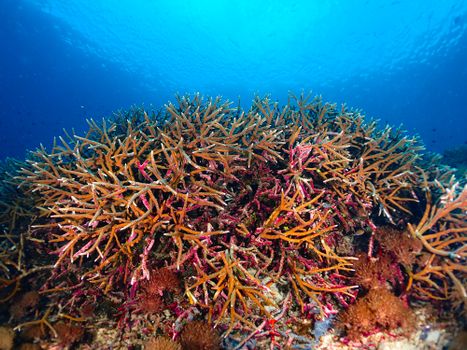
I rolled off the side of the zodiac, the warm Caribbean salt water hitting my face like a familiar greeting. But this wasn't a standard "look-but-don't-touch" dive. Tucked into the waistband of my BCD was a wire brush and a tube of marine epoxy. As I descended, the rhythmic crackle-pop of a healthy reef—the sound of a thousand tiny shrimp and parrotfish—filled my ears. Below me, rows of PVC "trees" swayed in the current, laden with fragments of Staghorn coral like living Christmas ornaments.
I wasn’t just a tourist; I was a gardener.
This spring, the travel industry is witnessing a seismic shift. The "Sun, Sand, and Sea" trope is being replaced by "Science, Stewardship, and Scuba." Travelers are no longer content with being passive observers of environmental decline. We want in on the solution. Coral restoration has moved from the niche world of marine biology into the mainstream of high-end, high-impact travel. If you’re looking to make your spring travels mean something, here is the definitive guide to the most incredible coral restoration projects you can actually participate in right now.
1. Bonaire: The "OG" of Reef Renewal
Bonaire has long been the "Divers' Paradise," but it’s now the global gold standard for citizen-led restoration. The Reef Renewal Foundation Bonaire (RRFB) has turned the island into a massive underwater laboratory.
The Experience
You don’t just watch; you work. After a half-day orientation at a partner dive shop like Buddy Dive Resort, you’ll head to the nurseries. You’ll learn to "clean" the trees—scrubbing away algae that competes with the coral for nutrients—and, if you're there for a full course, you’ll help "outplant" mature fragments onto the reef using specialized cement.
Why It’s Trending This Spring
Spring offers the clearest visibility in Bonaire, sometimes exceeding 100 feet. The water is a consistent 80°F, making those long, stationary "gardening" dives comfortable without a thick wetsuit.
Pro-Tip: Book your "Reef Renewal Diver" specialty course at least three weeks in advance. The 7 AM "nursery maintenance" slots are the best because you’ll see eagle rays gliding past while the reef is waking up.
2. The Maldives: Luxury Meets Lab Work
If you think the Maldives is only for honeymooners sipping Moët, think again. Resorts like Gili Lankanfushi and Six Senses Laamu have integrated "Coral Lines" programs that are arguably the most Instagrammable (and impactful) in the Indian Ocean.
The Experience
At Gili Lankanfushi, the "Coral Lines" project involves tying small fragments of "opportunity" coral (pieces broken by storms or anchors) onto nylon ropes. These ropes are suspended in the lagoon until the coral is strong enough to be moved to the house reef. You get a unique ID number for your line and a link to a digital portal where you can track its growth via photos sent by the on-site marine biologists for years to come.
Insider Language
In the Maldives, don’t just call it "planting." Ask about the "nubbins" (the small coral fragments) and the "substrate" (the surface they are attached to). Using the term "thermal resilience" will immediately signal to the resident biologists that you’ve done your homework.
3. The Florida Keys: Scaling Up at the "Tavernier" Nursery
The Coral Restoration Foundation (CRF) in the Florida Keys is the largest organization of its kind in the world. This isn't boutique gardening; this is industrial-scale restoration.
The Experience
Based out of Key Largo, CRF hosts "Public Restoration Dive Programs." You’ll spend the morning in an educational seminar learning about the devastating "stony coral tissue loss disease" and the afternoon on a boat heading to the Tavernier Nursery—a massive underwater forest of over 500 coral trees.
The Logistics
- Cost: ~$100–$150 on top of standard charter fees.
- Spring Vibe: March and April are peak months. The "Coral Crew" culture in Key Largo is infectious; expect post-dive beers at Sharkey’s Pub where the talk is all about "genotypes" and "outplant success rates."
Pro-Tip: The "hidden entrance" to the best shore dive for scouting natural recovery is behind the Blue Hole in Big Pine Key. It’s low-key, quiet, and teeming with juvenile reef fish.
4. Bali, Indonesia: The Biorock Revolution
In the quiet village of Pemuteran in North Bali, they aren’t just growing coral; they’re electrifying it.
The Experience
The Biorock project uses low-voltage electrical currents to accelerate the calcification of coral skeletons. This allows coral to grow up to five times faster than normal. Visitors can take a "Biorock PADI Specialty" course. You’ll dive with a multimeter and learn how to wire the structures. It feels more like being an underwater electrician than a gardener.
Why It’s Incredible
The structures themselves are works of art—giant iron spiders and domes covered in neon-bright Acropora. It’s a surreal, sci-fi landscape that looks spectacular in wide-angle photography.
5. The Great Barrier Reef: Citizen Science 2.0
The world’s largest reef system is fighting back, and Great Barrier Reef Legacy is leading the charge with their "Living Coral Biobank."
The Experience
While you can’t always "plant" on the GBR due to strict zoning, you can participate in "Great Barrier Reef Census" expeditions. Trending this spring are the "Citizen Science Safaris" departing from Port Douglas. You’ll be tasked with photographing specific quadrants of the reef and uploading them to a global database that uses AI to track reef health.
The Budget/Logistics
| Destination | Project | Est. Cost (USD) | Best Time | How to Get There | | :--- | :--- | :--- | :--- | :--- | | Bonaire | Reef Renewal | $150 - $300 | Feb - May | Fly into Kralendijk (BON) | | Maldives | Coral Lines | $50 - $200 | Nov - April | Seaplane from Malé (MLE) | | Florida | CRF Keys | $100 + Dive | March - June | Drive from Miami to Key Largo | | Bali | Biorock | $80 - $150 | April - Oct | Driver from Denpasar to Pemuteran | | Australia | GBR Legacy | $250+ (Day trip) | Sept - May | Fly to Cairns (CNS) |
How to Spot "Greenwashing" in Coral Travel
Not every "coral planting" program is created equal. To ensure your spring trip actually helps the ocean, look for these three markers:
- Scientific Oversight: Is there a resident Marine Biologist or a partnership with a known NGO (like PADI AWARE or The Nature Conservancy)?
- Long-term Monitoring: Do they track the coral after it’s planted, or do they just "plant and forget"?
- Local Involvement: Does the project employ local captains and guides, or is it an "expat-only" operation?
Final Thoughts: The Saltwater Legacy
There is a specific kind of "good tired" you feel after a day of restoration. It’s different from the exhaustion of a hiking trip or the lethargy of a beach day. It’s the feeling of having used your buoyancy skills to delicately zip-tie a fragile lifeform to a rock, knowing that in five years, that "nubbin" will be a sprawling thicket providing a home for hundreds of fish.
This spring, don't just take photos. Leave a legacy. The reef is waiting for you.
---
More pictures
Tags
Share this guide
We may earn a commission if you click a link and buy a product or service, at no extra cost to you. How affiliate links work.
Been there?