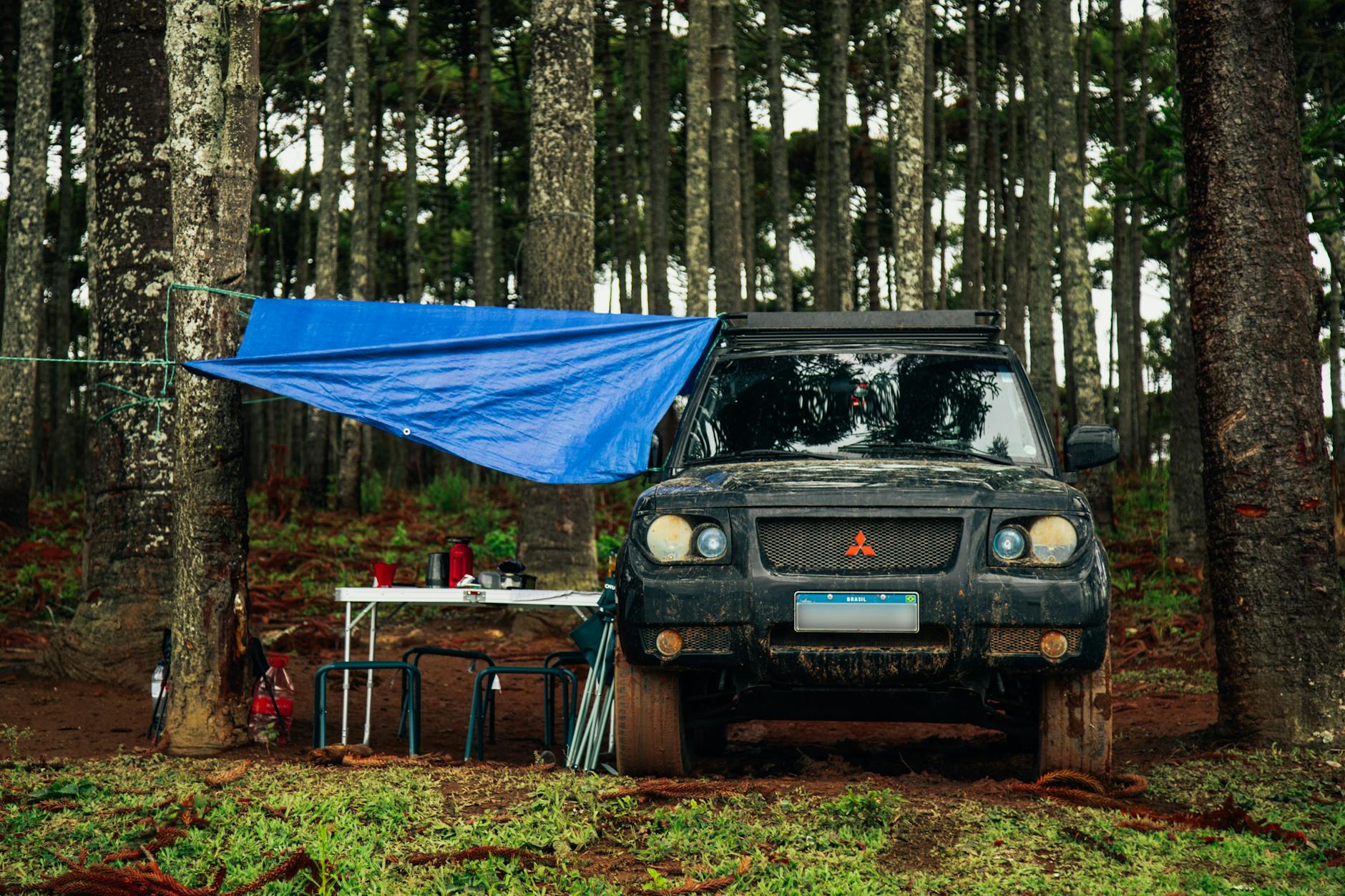
Ever dreamt of camping on Mars or exploring a bioluminescent world? This isn't your average campground guide. We're diving deep into six truly mind-bending camping spots so out-of-this-world, the locals have tried to keep them secret. Prepare to bookmark, share, and embark on an adventure that will redefine your perception of Earth.
The wind whipped around my tent, a low, mournful howl that sounded less like Earth and more like a distant, desolate planet. Outside, the landscape glowed under a sky so thick with stars it felt like I could reach out and scoop handfuls of cosmic dust. Red rock formations, sculpted by millennia of wind and erosion, stretched into the inky blackness, casting long, alien shadows. I remember thinking, "This isn't just camping; this is an interstellar journey without leaving the atmosphere."
That night, somewhere deep in a forgotten corner of what felt like another galaxy, it hit me: the most incredible camping experiences aren't found in manicured RV parks or bustling national park campgrounds. They're hidden, tucked away in the planet's most extreme, bizarre, and utterly breathtaking corners – places so surreal, so untouched, that the locals often guard their secrets like precious cosmic jewels. And honestly, who can blame them? These aren't just campsites; they're portals to other worlds.
For years, I've chased these whispers, these faint trails leading to landscapes that defy imagination. I’ve braved biting winds, navigated treacherous terrains, and embraced profound solitude, all for the privilege of waking up somewhere truly alien. And now, I’m pulling back the curtain (just a little) on some of these truly extraordinary spots. These aren't easy trips. They demand respect, preparation, and a commitment to Leave No Trace. But for the intrepid soul, the rewards are immeasurable. Get ready, fellow adventurers, because we're about to explore Earth's most extraterrestrial campgrounds.
---
1. The Whispering Sands of Xylos: Where Mars Meets Earth’s Embrace
My first encounter with the Whispering Sands was accidental. I was chasing a remote petroglyph site, following a barely-there track in the desert, when the landscape abruptly shifted. Gone were the familiar sagebrush and juniper; instead, I was surrounded by an army of hoodoos – bizarre, mushroom-shaped rock formations in shades of burnt orange and deep crimson. The silence was profound, broken only by the soft whoosh of the wind, carrying what felt like ancient secrets through the sculpted stone. It was like landing on Mars, if Mars had a gentle, artistic side.
This isn't a named park, but rather a vast, untamed expanse of geological oddities found in a remote, arid region (think somewhere between Utah's Goblin Valley and Arizona's Vermilion Cliffs, but even more secluded). Dispersed camping is allowed, meaning you pick your spot among the geological wonders. I spent three nights here, feeling like the sole inhabitant of a forgotten planet. The sunsets painted the formations in fiery hues, and the night sky was an observatory without walls – a brilliant tapestry of stars, nebulae, and the Milky Way stretching horizon to horizon. I even saw a few shooting stars that felt like greetings from passing alien ships.
Why it feels alien: The bizarre, wind-carved rock formations, the intense red and orange palette, the profound silence, and the vast, unobstructed night sky create an atmosphere unlike anywhere else. It’s a landscape that feels sculpted by cosmic forces.
Practical Tips:
- Access: Requires a high-clearance 4x4 vehicle. Roads are unpaved, often sandy or rocky. GPS is essential, but download offline maps. Cell service is non-existent.
- Water: Carry all your water. There are no natural sources. Plan for at least 1 gallon per person per day, plus extra for cooking/washing.
- Shelter: A sturdy, free-standing tent capable of handling wind is crucial. Sun protection (shade structure) is also vital during the day.
- Leave No Trace: Pack out absolutely everything. Dig catholes for human waste at least 200 feet from water sources and trails. These fragile ecosystems are easily damaged.
- Cost: Free dispersed camping, but the cost is in preparation and gear.
---
2. The Obsidian Coast of Vespera: Where Earth's Core Meets the Ocean
The first time I stood on the Obsidian Coast, the biting wind tore at my jacket, and the roar of the Atlantic felt like a primordial drum. Black sand, smooth as powdered charcoal, stretched for miles, meeting towering basalt columns that looked like they’d been plucked from a giant’s architectural blueprint. This isn’t a beach for sunbathing; it’s a dramatic, moody landscape that feels like the very edge of the world, where volcanic fury once sculpted the land and the ocean continues its relentless assault. I’m talking about a place reminiscent of Iceland’s Reynisfjara, but even more raw and untouched, tucked away on a lesser-known island off the coast of Europe.
My campsite was a small, designated area behind a protective dune, just enough to shield my tent from the harshest winds. Waking up to the sight of those black sands and columns, with the mist rolling in from the sea, felt like being on a newly formed planet, still cooling from its fiery birth. One evening, a faint shimmer of green danced across the sky – the aurora borealis, a rare treat at this latitude. It was a cosmic ballet against the stark, volcanic backdrop, an experience that etched itself permanently into my soul.
Why it feels alien: The stark contrast of black sand, dark basalt, and the often-grey, turbulent sea creates a dramatic, almost monochromatic landscape. The raw power of nature here feels untamed and ancient, like a planet still in its geological infancy.
Practical Tips:
- Weather: Expect unpredictable weather – strong winds, rain, and cold, even in summer. Layered, waterproof, and windproof clothing is essential.
- Tides: Be extremely aware of tide charts. Sneaker waves are common and dangerous. Never turn your back on the ocean.
- Footwear: Sturdy, waterproof hiking boots are a must for navigating the rocky, uneven terrain and black sand.
- Photography: This place is a photographer's dream, but protect your gear from sand and moisture.
- Cost: Small fee (€10-€20/night) for designated camping areas, often with basic facilities (toilet, water).
---
3. The Lumina Grotto: Journey to a Subterranean Starfield
Imagine paddling a kayak through absolute darkness, the only sound the gentle drip of water and the soft dip of your paddle. Then, as you round a bend, the cavern ceiling above you explodes into a shimmering, electric blue firmament. Thousands of tiny, bioluminescent organisms create a living, breathing starfield, mirroring the constellations you know, but in an entirely new, subterranean sky. This isn't science fiction; it's the Lumina Grotto, a secret cave system hidden deep within a tropical rainforest (think New Zealand’s Waitomo Caves or Mexico’s cenotes, but with a unique, vibrant twist).
My experience here wasn't camping in the grotto itself – that's strictly prohibited to protect the delicate ecosystem – but at a tiny, eco-friendly jungle lodge a short hike away. The real adventure was the guided night tour. We entered the grotto in small groups, told to remain absolutely silent. As our eyes adjusted, the magic unfolded. It felt like floating through space, surrounded by galaxies of light. The sheer awe of it was overwhelming, a reminder that "alien" can be found not just in vast landscapes, but in the intricate, hidden wonders beneath our feet.
Why it feels alien: The complete darkness punctuated by thousands of glowing organisms creates an illusion of being in deep space or an entirely different dimension. It's a surreal, almost spiritual experience.
Practical Tips:
- Guided Tours: Access is almost always via guided tour to protect the fragile environment. Book well in advance as spots are limited.
- Silence is Golden: Respect the guides' instructions to maintain silence. It enhances the experience for everyone and minimizes disturbance to the organisms.
- Photography: Often restricted or requires special permission due to light pollution. Embrace the moment, not the camera.
- Eco-Lodges: Look for nearby eco-lodges or guesthouses that support conservation efforts.
- Cost: Tour fees can range from $50-$150, depending on the length and type of experience (kayak, boat, walk). Accommodation extra.
---
4. Sky-Mirror Flats: Walking on Clouds, Camping Under the Cosmos
There are few places on Earth where the horizon vanishes, where the sky merges seamlessly with the ground, creating an optical illusion so profound it makes you question reality. The Sky-Mirror Flats are one such place. Imagine a vast, perfectly flat expanse, covered by a thin film of water after a recent rain. The result? The world's largest natural mirror, reflecting the sky with breathtaking clarity. I'm talking about a place that makes Bolivia's Salar de Uyuni look busy, a truly remote salt flat in a high-altitude desert region.
I camped here during the wet season, after a rare rain shower had left the perfect reflective layer. My tent, pitched on a slightly raised mound to avoid the water, seemed to float in the middle of a boundless canvas. Sunrises and sunsets were kaleidoscopic events, painting the entire world in vibrant hues. But it was the night that truly transcended. The stars above were mirrored perfectly below, creating a 360-degree celestial dome. I felt like I was suspended between two universes, walking on the Milky Way itself. It was cold, brutally exposed, but utterly magnificent.
Why it feels alien: The illusion of walking on clouds, the infinite horizon, and the perfect reflection of the sky create an utterly disorienting and otherworldly experience. It's a place where visual perception is constantly challenged.
Practical Tips:
- Seasonality: Crucial. Visit during the wet season for the mirror effect (check local weather patterns). The dry season is vast and impressive, but lacks the reflection.
- Sun Protection: Extreme UV radiation at high altitude. Sunscreen, sunglasses (polarized are best for reflections), and wide-brimmed hats are non-negotiable.
- Hydration: The dry air and high altitude demand constant hydration.
- Navigation: Absolutely essential. The flat landscape offers no landmarks. GPS and a compass are vital. Go with experienced guides if unsure.
- Cold: Nights are freezing, even in summer. Bring extreme cold-weather sleeping gear.
- Cost: Usually part of a multi-day guided tour, costing $300-$800, which includes transport, food, and basic accommodation (often rustic salt hotels or basic refugios).
---
5. The Elderwood Canopy: Whispers of a Primordial Forest
Step into the Elderwood Canopy, and you step back in time. This isn't just a forest; it's a living, breathing cathedral of ancient giants, draped in emerald mosses and shrouded in an ethereal mist. Towering trees, some hundreds, even thousands of years old, reach for the sky, their colossal trunks forming natural archways and their dense canopies filtering the sunlight into dappled, mystical patterns. Think the Pacific Northwest's Olympic National Park rainforests, but deeper, more isolated, and with an almost palpable sense of ancient energy.
I found a designated backpacking campsite deep within this verdant labyrinth after a challenging hike. My tent was dwarfed by the surrounding titans, and the air was thick with the scent of damp earth, decaying leaves, and fresh growth. The sounds of the forest at night were incredible: the hoot of an owl, the rustle of unseen creatures, the drip of moisture from the canopy. It felt like being immersed in a fairy tale, a place where time moves differently and forgotten spirits might still roam. The sheer scale and density of life here are humbling, making you feel like a tiny, temporary visitor in a truly ancient world.
Why it feels alien: The enormous scale of the trees, the dense, misty atmosphere, the profusion of moss and ferns, and the deep, hushed quiet create a primeval, almost fantastical environment. It feels like a forest from another era, or even another planet where flora has evolved differently.
Practical Tips:
- Permits: Often required for backcountry camping. Check with local forestry services or park authorities.
- Bear Safety: This is bear country. Know how to store food properly (bear canisters/bags), carry bear spray, and make noise on trails.
- Moisture: Expect damp conditions. Waterproof gear (tent, jacket, pack cover) is essential.
- Navigation: Trails can be overgrown or difficult to follow. Carry a map, compass, and GPS.
- Leave No Trace: Stick to established trails, pack out all waste, and respect wildlife.
- Cost: Permit fees are usually minimal ($5-$30). The main cost is gear and transportation.
---
6. Aeolian Peaks Basecamp: On the Roof of the World, Under a Billion Stars
My lungs burned with every step, the air thin and crisp, carrying the scent of ice and rock. Above me, jagged, snow-capped peaks clawed at the impossibly blue sky, their faces etched with glaciers and ancient scars. This was the Aeolian Peaks, a remote mountain range in a less-traveled corner of the Andes (picture Patagonia's Fitz Roy Massif, but even more challenging to access). Reaching the basecamp felt like reaching a sanctuary on the very edge of space.
My tent was pitched on a small, rocky ledge, nestled against a moraine, with an uninterrupted view of the colossal peaks. The wind was a constant companion, shaping the clouds into dramatic, fast-moving sculptures. But it was the night that was truly transformative. With no light pollution for hundreds of miles, the stars were so bright, so numerous, they seemed to hum. I saw satellites tracking across the sky, felt the cold, crisp air on my face, and understood, deeply, the vastness of the cosmos. This wasn't just camping; it was an existential experience, putting humanity's place in the universe into sharp, breathtaking perspective.
Why it feels alien: The stark, treeless alpine landscape, the towering, glaciated peaks, the thin air, and the overwhelming sense of isolation create an environment that feels inhospitable yet profoundly beautiful, like a moonscape or a distant, ice-bound planet.
Practical Tips:
- Acclimatization: Crucial for high altitude. Plan for gradual ascent and spend a day or two acclimatizing at lower elevations before pushing higher.
- Gear: This is expedition-level camping. Four-season tent, sub-zero sleeping bag, down jacket, crampons, ice axe (depending on route) are often necessary.
- Experience: Not for beginners. You need solid backcountry navigation, wilderness survival skills, and physical fitness. Consider hiring an experienced local guide.
- Weather: Extremely unpredictable. Be prepared for sudden blizzards, high winds, and rapid temperature drops.
- Safety: Go with a buddy, carry a satellite communicator, and inform others of your itinerary.
- Cost: Can be expensive. Guide fees ($100-$300/day), specialized gear, and travel to remote regions add up.
---
Embracing the Unknown: General Tips for Your Alien Adventure
These "otherworldly" camping spots aren't for the faint of heart, but they offer rewards that far surpass any typical vacation. To ensure your journey is safe, responsible, and truly unforgettable, keep these universal tips in mind:
- Research Relentlessly: These aren't well-documented spots. Dig deep. Talk to locals (respectfully!), join online forums, study maps, and read obscure guidebooks. Knowledge is your greatest asset.
- Master Leave No Trace (LNT) Principles: This is non-negotiable. These places are pristine because they're untouched. Pack it in, pack it out. Stay on durable surfaces. Respect wildlife. Minimize campfire impact (or forgo fires entirely). Leave no trace of your presence.
- Be Over-Prepared: Weather can change in an instant. Terrain can be unforgiving. Isolation is guaranteed. Carry extra food, water, first-aid, navigation tools, and emergency communication devices. Assume you'll be self-sufficient for longer than planned.
- Invest in Quality Gear: Your life might depend on it. A reliable tent, appropriate sleeping system, and sturdy layers are crucial. Don't skimp on essentials.
- Go with Experience (or Get Some): If you're new to extreme backcountry, start smaller. Consider hiring a local guide for your first "alien" trip. Their knowledge of terrain, weather, and local nuances is invaluable.
- Respect Local Culture and Environment: These "secrets" are often protected by local communities. Be humble, ask permission if entering private or sacred lands, and contribute positively to the local economy if possible.
- Digital Detox: Embrace the disconnection. Leave your phone on airplane mode or better yet, leave it behind. Immerse yourself fully in the experience. You'll thank yourself later.
- Tell Someone Your Itinerary: Even if you're going solo, always inform a trusted friend or family member of your exact plans, including expected return dates.
---
The Call of the Cosmos
There’s a profound difference between seeing a picture of an alien landscape and waking up in one, zipping open your tent to a sunrise that feels like it’s painting a new world. These are the experiences that shake you, humble you, and fundamentally change your perspective on what Earth truly holds. They are the secrets whispered on the wind, the places that local adventurers cherish and protect.
So, are you ready to venture beyond the beaten path? To find a piece of Earth that feels like it belongs to another galaxy? These places are waiting, demanding your respect, your courage, and your commitment to preserving their magic.
Which of these otherworldly camps calls to your adventurous spirit first? Share your thoughts in the comments below, and don't forget to tag @Tripsora and #AlienCamping in your future adventures! Let's inspire each other to explore the truly extraordinary.
More pictures
Tags
Share this guide
We may earn a commission if you click a link and buy a product or service, at no extra cost to you. How affiliate links work.
Been there?