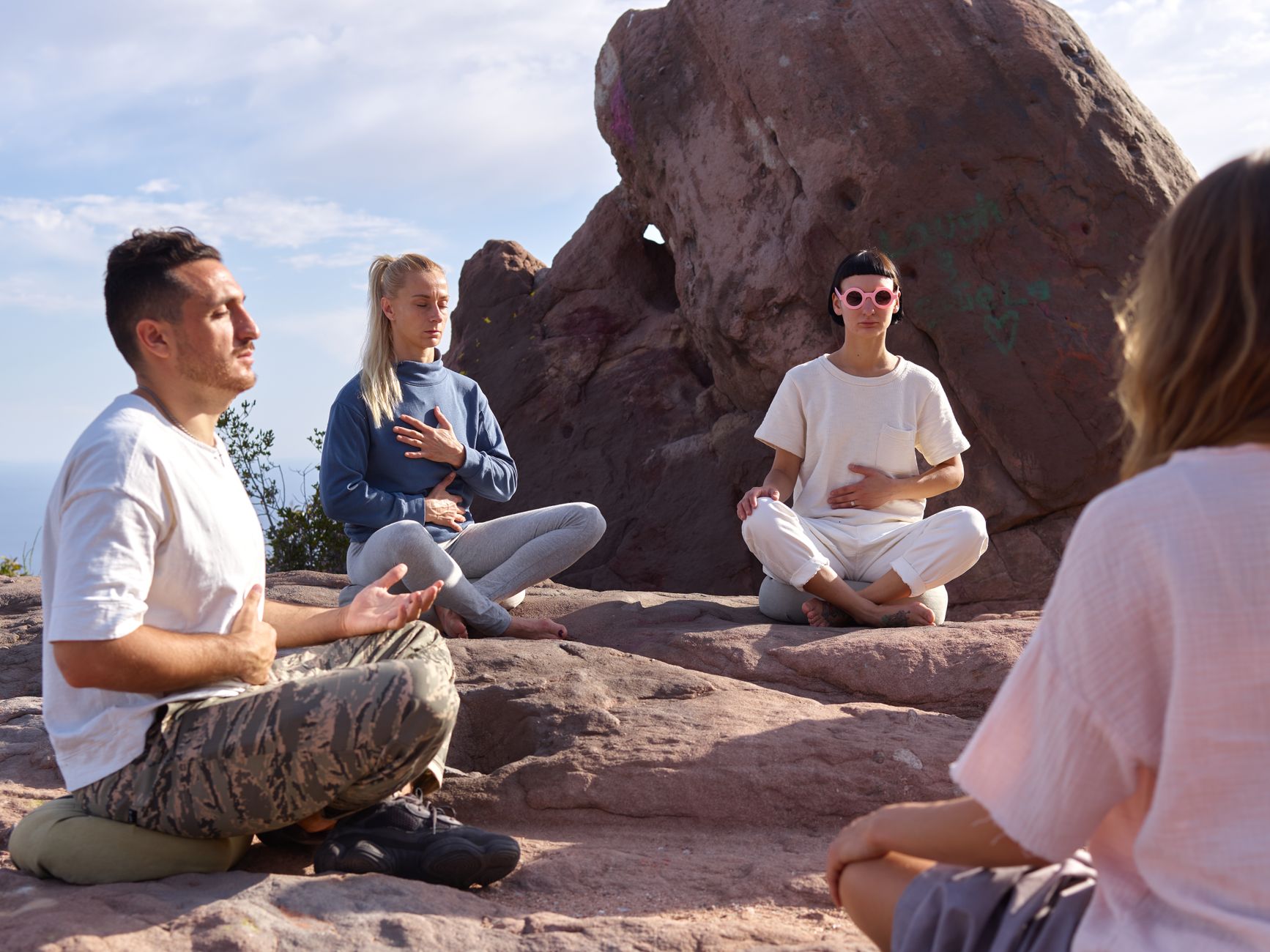
Uncover 5 transformative high-altitude breathwork retreats emerging this year across Peru, the Himalayas, and the Alps. Elevate your mind and lungs—read more!
The Hook: Breathless at 11,500 Feet
I stepped off the narrow-gauge train in Ollantaytambo, Peru, and felt the altitude hit my sternum before my feet touched the cobblestones. The air at 9,200 feet didn't just feel cool—it felt thin, metallic, and sharp, carrying the scent of burning eucalyptus, wet terra-cotta tiles, and damp granite from the Urubamba River. My blood oxygen monitor read 89%. My pulse thrummed behind my ears like a muffled bass drum.
Twelve hours later, wrapped in an alpaca wool blanket inside a sunlit mud-brick shala, my facilitator instructed our group to take 30 rapid, circular inhalations. No pauses. Inhale fully through the belly, fill the ribs, release without force.
By the third round of retention, something extraordinary happened. The ambient oxygen reduction of the Sacred Valley, combined with voluntary hyperventilation, produced a sensation unlike anything I’d experienced at sea level: a sudden, luminous wave of mental clarity accompanied by a deep, vibrational hum in my extremities. The high-altitude setting didn't make breathwork harder; it turned it into an instant portal to altered consciousness.
High-altitude breathwork retreats are officially transitioning from niche biohacking experiments to the defining wellness trend of this year. Here is your definitive, high-authority guide to why this movement is exploding—and where you need to go to experience it yourself.
---
The Science of Altitude Breathwork: Why Thin Air Accelerates Somatic Release
When you travel above 6,000 feet (1,800 meters), atmospheric pressure drops, meaning each breath delivers fewer oxygen molecules to your bloodstream. Your body responds by producing more red blood cells, elevating heart rate variability (HRV), and stimulating the production of brain-derived neurotrophic factor (BDNF).
When you layer Conscious Connected Breathing (CCB) or Holotropic Breathwork on top of mild altitude hypoxia, you create a unique physiological environment:
- Accelerated Transient Hypofrontality: Thin air speeds up the down-regulation of the brain's Default Mode Network (DMN), quietening the inner critic and ego defense mechanisms twice as fast as sea-level meditation.
- Enhanced Nitric Oxide Release: Controlled breath retention at elevation forces vascular dilation, boosting circulation and cellular oxygenation once breathing normalizes.
- Deeper Somatic Release: Lower baseline oxygen levels lower the threshold for emotional discharge, making it easier to release stored trauma trapped in the fascial network.
---
1. Sacred Valley, Peru: Shamanic Breathwork & Andean Hypoxia (Elevation: 9,500 ft / 2,900 m)
The Sacred Valley between Cusco and Machu Picchu has long been a spiritual epicenter, but a new wave of facilitators is pairing ancient Quechua wisdom with modern somatic breathwork.
``` [Urubamba River Valley] | +-------------+-------------+ | | [Somatic Shala] [Glacial Runoff Pools] (Breathwork) (Cold Therapy) ```
At emerging sanctuaries near Urubamba and Pisac, mornings begin with Apu-facing Pranayama (breathing directed toward sacred mountain peaks) designed to acclimate the nervous system. Afternoon sessions feature extended 90-minute conscious connected breathwork journeys, supported by native botanical smoke—primarily Copally resin and Palo Santo—and live soundscapes using pre-Incan clay ocarinas and condor-bone flutes.
- The Vibe: Earthy, deeply rooted, and energetically charged.
- Somatic Style: Holotropic and circular breathwork integrated with traditional Andean plant medicine integration.
- Pro-Tip: Skip the prescription altitude medication (Diamox) if your physician agrees, and instead sip freshly steeped Muña (Andean mint) and Coca leaf tea throughout the day. The local herbs contain natural alkaloid compounds that open pulmonary blood vessels without disrupting your blood pH during hyperventilation sessions.
---
2. Spiti Valley, Himachal Pradesh, India: High-Desert Himalayan Pranayama (Elevation: 12,500 ft / 3,800 m)
If Peru offers earth and roots, Spiti Valley offers pure space. Tucked behind the rain shadow of the Indian Himalayas near the Tibetan border, Spiti is a cold, high-altitude desert where ancient Mahayana Buddhist monasteries cling to sheer cliff faces.
Emerging retreats here are running Traditional Himalayan Pranayama & Hypoxic Pause Work. Rather than fast, emotional breathwork, the focus in Spiti is on extreme breath control (Kumbhaka) and Kriya traditions passed down through monastic lines.
Practicing Vayu Pranayama in an unheated, 1,000-year-old mud-and-timber shrine while monks chant low-register mantras creates a resonance that physically vibrates through your sternum.
- The Vibe: Monastic, austere, profoundly silent.
- Somatic Style: Kumbhaka (breath retention), Nadi Shodhana, and slow Sudarshan Kriya.
- Pro-Tip: The secret retreat center in Kibber village sits at 14,200 feet. To avoid severe acute mountain sickness (AMS), spend three mandatory rest days in Kaza sipping salted butter tea (Gur Gur Chai) before attempting any extended retention work.
---
3. Kazbegi (Stepantsminda), Georgia: Caucasus Alpine Hypoxia (Elevation: 7,200 ft / 2,200 m)
Located in the shadow of Mount Kazbek (16,558 ft), this rugged region of the Greater Caucasus is Eastern Europe's premier hotspot for biohacking-focused somatic retreats.
Kazbegi breathwork programs combine SOMA Breath protocols—which utilize rhythmical breathing set to brainwave-entraining music—with cold-water immersion in glacial rivers like the Tergi.
``` +-----------------------------------------------------------+ | KAZBEGI HIGH-ALTITUDE DAILY PROTOCOL | +-----------------------------------------------------------+ | 06:30 AM | Sun-gazing & 4-7-8 Parasympathetic Priming | | 09:00 AM | Rhythmical Hypoxic Breathwork (SOMA) | | 01:00 PM | Glacial Dip in Tergi River (4°C / 39°F) | | 05:00 PM | Yin Yoga & Carbon Dioxide Tolerance Drills | +-----------------------------------------------------------+ ```
Retreats take place in renovated stone shepherd lodges converted into eco-chics sanctuaries featuring glass-walled shalas overlooking the 14th-century Gergeti Trinity Church.
- The Vibe: Rugged luxury meets biohacking performance.
- Somatic Style: Music-driven SOMA breath, Intermittent Hypoxic Training (IHT), and ice-bath contrast therapy.
- Pro-Tip: To access the hidden natural thermal sulphur springs post-session, follow the unpaved trail behind the village of Sno for 2.3 miles until you hit the rusted iron pipe. The water sits at a constant 38°C (100°F)—ideal for flushing lactic acid after intensive diaphragm work.
---
4. Engadin Valley, Switzerland: Alpine Somatic Refinement (Elevation: 6,000 ft / 1,800 m)
In the pristine air of the Swiss Alps, near St. Moritz, retreat centers are taking a clinical, highly measured approach to high-altitude breathwork.
Here, high-altitude breathwork is monitored with pulse oximeters, HRV trackers, and continuous capnography (measuring exhaled carbon dioxide levels). Instructors guide participants through custom Buteyko and Conscious Breathing routines aimed at resetting baseline $CO_2$ tolerance, reducing chronic stress, and improving athletic endurance.
Somatic sessions are often conducted inside cedar saunas, followed by snow rolls or plunges into Lake St. Moritz during early autumn.
- The Vibe: Clinical, pristine, ultra-high-end.
- Somatic Style: Buteyko Method, Oxygen Advantage, and HRV-guided breath training.
- Pro-Tip: Book during the shoulder season (late September to early November). The larch trees turn brilliant gold, mountain fog rolls low across the lakes, and retreat rates drop by nearly 40% compared to winter ski peak season.
---
5. Bariloche & Northern Patagonia, Argentina: Andean Glacial Somatics (Elevation: 5,000–7,500 ft / 1,500–2,300 m)
Patagonia’s lake district, around San Carlos de Bariloche, is home to granite spires, ancient Fitzroya forests, and windswept alpine lakes.
Emerging centers along Lake Nahuel Huapi use Functional Outdoor Breathwork. Rather than sitting indoors on cushions, facilitators lead groups on "Silent Breath Treks" up the slopes of Cerro Catedral. Hikers synchronize their footfalls with breath ratios (e.g., 4 steps inhale, 4 steps hold, 8 steps exhale), training the cardiovascular system to operate efficiently in low-oxygen environments.
Evening sessions return to rustic log lodges for fire-lit somatic trauma release using deep circular breathing and vocal toning.
- The Vibe: Wild, adventurous, elemental.
- Somatic Style: Movement-integrated breathwork, vocalization release, and outdoor cold exposure.
- Pro-Tip: Seek out facilitators in the eco-colony of Colonia Suiza. Ask for the local sourdough curanto—a traditional dish cooked in an earthen pit with red-hot stones—for the ultimate recovery meal post-session.
---
Logistics & Travel Blueprint: High-Altitude Breathwork
Planning a high-altitude breathwork trip requires more preparation than a standard beach wellness getaway. Here is a breakdown of costs, transit, and timing:
| Location | Best Time to Visit | Estimated Cost (7-Day Retreat) | Nearest Major Airport | Getting There | | :--- | :--- | :--- | :--- | :--- | | Sacred Valley, Peru | May – October (Dry Season) | $1,800 – $3,500 USD | Cusco (CUZ) | 1.5-hour private taxi from Cusco city center | | Spiti Valley, India | June – September | $900 – $1,800 USD | Kullu-Manali (KUU) | 10-hour high-mountain overland jeep pass from Manali | | Kazbegi, Georgia | May – Late October | $1,400 – $2,800 USD | Tbilisi (TBS) | 3-hour private transfer via the Georgian Military Highway | | Engadin, Switzerland| Sept – Nov / April – May | $3,500 – $7,000 USD | Zurich (ZRH) | 3-hour panoramic train via the Rhaetian Railway | | Bariloche, Argentina| October – December (Spring) | $1,600 – $3,200 USD | Bariloche (BRC) | 30-minute shuttle from airport to Lake Nahuel Huapi |
---
Essential Survival Rules for Breathing in Thin Air
High-altitude breathwork places unique demands on human physiology. Follow these mandatory rules to prevent altitude sickness and maximize somatic breakthroughs:
- Rule 1: Hydrate with Trace Minerals. High altitude causes rapid fluid loss through respiration. Water alone isn't enough; add liquid ionic trace minerals (magnesium, potassium, sodium) to every liter to prevent painful muscle cramping during tetany (a common, safe physical reaction during circular breathwork).
- Rule 2: The 48-Hour Acclimatization Rule. Never participate in a intense hyperventilation session (Holotropic or CCB) within 48 hours of landing at an elevation above 8,000 feet. Allow your arterial blood pressure and renal system to adapt first.
- Rule 3: Master the "Belly First" Rule. The tendency at high altitude is to take short, chest-driven breaths. This triggers the sympathetic nervous system and accelerates altitude sickness. Maintain diaphragmatic breath at rest—letting the abdomen expand laterally before the chest lifts.
- Rule 4: Pack the Right Gear. Bring a high-grade wool beanie, eye mask, portable pulse oximeter, lip balm with SPF, and an insulated copper water bottle. High-altitude shalas can chill rapidly once dynamic movement stops during extended breath retentions.
---
Final Thoughts: The Horizon of High-Altitude Somatics
There is a reason spiritual traditions across the globe built their temples on mountain tops. High altitude strips away distraction, thins the air, and demands absolute presence. When paired with modern, intentional breathwork practices, the result is a rapid nervous system reset that sea-level environments simply cannot match.
Whether you find yourself holding your breath under the gold-leaf ceilings of a Georgian mountain lodge or tracking your HRV in the Swiss Alps, breathing at elevation reminds us of a fundamental truth: life is lived in the space between the inhale and the exhale.
---
More pictures




Tags
Share this guide
We may earn a commission if you click a link and buy a product or service, at no extra cost to you. How affiliate links work.
Been there?