
Swap the tourist buses for two wheels. From the windswept fjords of Patagonia to the misty, island-hopping bridges of Japan, this is the definitive, no-nonsense guide to the world’s most spectacular bike touring routes you can ride right now. Pack your panniers—adventure is calling. ---
The Hook: Where the Asphalt Ends and the World Begins
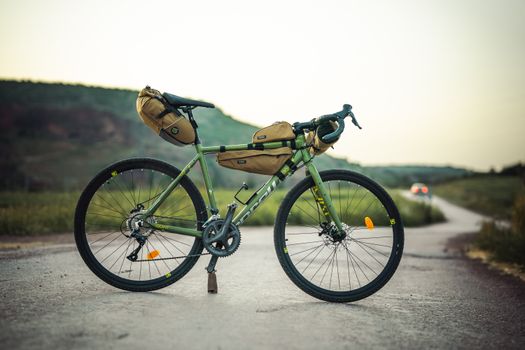
I stepped off the rickety wooden ferry at Puerto Ibáñez and was instantly hit by the sharp, metallic tang of glacial air and the sweet, earthy scent of burning wild cypress. My hands were stiff with cold, and my steel-frame touring rig was caked in a fine, gray layer of Patagonian road grit. As I clicked my shoes into the pedals, the only sound was the rhythmic crunch-crunch of my 45mm gravel tires biting into the loose volcanic soil. Behind me lay the ferry; ahead of me lay 1,200 kilometers of untamed, wind-battered wilderness.
There is a distinct magic to experiencing the world at 15 kilometers per hour. You don’t just see a landscape; you breathe it, climb it, sweat through it, and occasionally taste its dust. If you are tired of sanitized, air-conditioned tour buses and curated Instagram viewpoints, bike touring is your antidote.
Right now, a new wave of cycling routes is opening up, offering unmatched access to some of the most dramatic, remote landscapes on Earth. Whether you are a seasoned self-supported purist or a curious weekend warrior looking for a credit-card touring escape, these are the absolute best bike touring routes to ride right now.
---
1. The Carretera Austral, Chile: Riding the Edge of Earth
The Route & Terrain
Chile’s Route 7—the legendary Carretera Austral—stretches over 1,200 kilometers from Puerto Montt to the remote outpost of Villa O'Higgins. This is not a route for the faint of heart. It is a wild, jagged ribbon of dirt, loose gravel (ripio), and occasional asphalt that slices directly through the heart of Chilean Patagonia. You will ride past hanging glaciers that glow an eerie neon blue, through temperate rainforests dripping with giant ferns, and alongside rivers so turquoise they look photoshopped.
The Insider Experience
Forget the standard tourist stops. When you ride into the tiny town of Puyuhuapi, skip the expensive hot springs resort across the bay. Instead, look for a hand-painted wooden sign pointing toward "Termas del Ventisquero." It’s a rustic, locally owned set of hot pools built right into the rocky shoreline where you can soak your aching quads next to the freezing waters of the fjord.
For dinner, don’t settle for generic pasta. Hunt down the green corrugated iron cabin in Villa Amengual. Inside, an elderly woman named Maria bakes empanadas de pino (beef, onions, raisins, and hard-boiled eggs) in a wood-fired iron stove. The pastry is flaky, rich with lard, and exactly the calorie bomb your body craves after climbing a 10% gradient in a headwind.
- Pro-Tip: The Patagonian wind is a physical entity. Always ride north to south. If you ride south to north, you will battle a relentless, spirit-crushing headwind that can literally blow you off your bicycle.
---
2. The Shimanami Kaido, Japan: The Island-Hopping Pilgrimage
The Route & Terrain
If Patagonia is a rugged test of survival, Japan’s Shimanami Kaido is a masterclass in civil engineering and serene coastal beauty. This 70-kilometer cycleway hops across six islands in the Seto Inland Sea, connected by a series of towering, architecturally stunning suspension bridges. The entire route is painted with a dedicated blue line, making navigation completely foolproof. It is the perfect introduction to bike touring, yet beautiful enough to captivate veteran riders.
The Insider Experience
While most tourists blast through the route in a single day, the secret to the Shimanami Kaido is slow travel. Spend the night on Ikuchijima Island at a traditional ryokan (inn).
Instead of staying on the main highway, take the "Island Explorer" detour on the northern coast of Ikuchijima. Here, you’ll ride through terraced orchards heavy with hassaku (a bitter, native Japanese citrus). Stop at the tiny, family-run farm stands where you can drop a 100-yen coin into an honor box and grab a bag of fresh oranges.
Before sunset, pedal up to the Hill of Hope (Miraishin no Oka) at the Kosanji Temple. It’s a surreal, 5,000-square-meter garden made entirely of Italian Carrara marble, gleaming white against the deep blue of the inland sea.
- Pro-Tip: Rent a high-quality road bike or e-bike at the Onomichi Port terminal. If you get tired or hit bad weather, you can drop the bike off at any of the designated terminals along the islands and hop on a local ferry to complete your journey.
---
3. The Great Dolomite Road, Italy: High-Altitude Alpine Drama
The Route & Terrain
Spanning from Bolzano to Cortina d’Ampezzo, the Great Dolomite Road (Grande Strada delle Dolomiti) is a masterclass in alpine drama. This is pure paved road heaven, but it requires serious climbing legs. You will tackle legendary Giro d'Italia passes like the Passo Falzarego and Passo Pordoi, surrounded by the sheer, pale limestone cliffs of the Dolomites. The air smells of pine resin, fresh alpine meadows, and high-altitude ozone.
The Insider Experience
The real magic happens when you get off the main asphalt and onto the gravel military tracks left behind from World War I. If you are riding a gravel bike or a mountain bike equipped with wide tires, detour up to the Fanes-Sennes-Prags Nature Park.
The climb is brutal, but you will arrive at Rifugio Fanes, a high-mountain hut perched at 2,060 meters. Skip the standard energy bars. Sit on the wooden deck and order a plate of canederli (savory bread dumplings studded with speck) swimming in a rich, golden beef broth, paired with a cold, crisp Lagrein red wine.
- Pro-Tip: Start your climbs no later than 6:30 AM. By 10:00 AM during the summer months, the mountain passes are swarming with roaring sports cars and packs of motorbikes. Early morning offers silent, empty roads and a soft, golden light that makes the limestone peaks look like they are glowing from within.
---
4. The Westfjords Way, Iceland: Black Sand and Midnight Sun
The Route & Terrain
Iceland’s Ring Road is notoriously crowded, but the Westfjords Way is a remote, gravel-strewn escape into the absolute wild. This 950-kilometer route loops around the claw-like northwestern peninsula of Iceland. The terrain is relentless: steep gravel climbs up mountain passes, long stretches along desolate black-sand beaches, and deep fjords where the mountains plunge straight into the frigid North Atlantic.
The Insider Experience
In the Westfjords, water is life. Not just the freezing rain that will inevitably test your waterproof gear, but the geothermal warmth bubbled up from the earth.
Skip the commercial pools. Look for Hellulaug, a geothermal pool tucked away in the rocks right on the shore of Vatnsfjörður. It is completely natural, free, and invisible from the road. You can soak in 40°C (104°F) mineral water while watching icebergs drift slowly across the fjord.
Afterward, pedal to the tiny village of Þingeyri and visit Simbahöllin, a cozy café set in a restored 1915 merchant's house. Order their famous Belgian waffles topped with homemade rhubarb jam and whipped cream—it’s the ultimate fuel for the next mountain pass.
- Pro-Tip: Do not buy bottled water. Iceland’s mountain streams are incredibly pure. You can fill your bottles directly from any fast-flowing stream marked with a blue sign. It is colder, fresher, and cleaner than anything you can buy in a store.
---
5. The Otgontenger Loop, Mongolia: The Ultimate Off-Grid Bikepacking
The Route & Terrain
For those who want to truly disappear, the Otgontenger Loop in Western Mongolia is the final frontier. There are no paved roads, no signs, and absolutely no cell service. You will navigate via GPS tracks across endless rolling green steppes, high mountain passes, and river crossings. The landscape is dominated by the sacred, snow-capped peak of Otgontenger (4,031 meters), rising like a white giant over the grassy plains.
The Insider Experience
This is a route defined by human connection. Mongolian nomads are legendary for their hospitality. If you see a ger (yurt) with smoke curling from the chimney, you are welcome.
When you approach, yell "Hold the dog!" (Nohoi khorio!) to alert the family. You will likely be invited inside to sit on low wooden stools. Accept whatever they offer with your right hand, supporting your right elbow with your left hand as a sign of respect. You will be served suutei tsai (salted milk tea) and aarool (dried yak curd). It is sour, hard as rock, and packed with calcium and protein—perfect food for long-distance cycling.
- Pro-Tip: You must ride a plus-tire bikepacking rig (at least 2.8-inch tires) or a mountain bike. The "roads" are actually parallel dirt tracks carved by old Russian trucks, filled with deep sand, river cobbles, and sudden washouts.
---
The Budget/Logistics Blueprint
To help you choose your next two-wheeled adventure, here is a quick-reference guide to the logistics, costs, and best times to ride these epic routes.
| Route Name | Best Time to Visit | Est. Daily Cost ($ USD) | Key Gear Needed | How to Get There | | :--- | :--- | :--- | :--- | :--- | | Carretera Austral (Chile) | December – March | $30 - $50 (Wild Camping) | 45mm tubeless tires, 4-season tent, windproof layers | Fly to Santiago, then domestic flight to Balmaceda or Puerto Montt. | | Shimanami Kaido (Japan) | October – November, April – May | $80 - $120 (Hostels/Ryokans) | Light touring setup, panniers or frame bags, rain shell | Take the Shinkansen (bullet train) from Osaka or Tokyo to Onomichi. | | Great Dolomite Road (Italy) | June – September | $90 - $150 (Mountain Refuges) | Compact gearing (34T chainring), high-quality brake pads | Fly to Venice or Munich, then take a train to Bolzano. | | Westfjords Way (Iceland) | July – August | $40 - $70 (Campsites/Self-cook) | Bulletproof rain gear, neoprene overshoes, stove | Fly to Reykjavik, then take a domestic flight or bus to Ísafjörður. | | Otgontenger Loop (Mongolia) | June – August | $15 - $30 (Wild Camping) | Plus-tire bikepacking bike, water filter, GPS/Satellite messenger | Fly to Ulaanbaatar, then take a domestic flight to Uliastai. |
---
The Ultimate Gear Philosophy: Pack Light, Ride Far
The biggest mistake rookie bike tourers make is overpacking. Every extra gram is a tax you pay on every hill.
- The Three-Layer Rule: You only need three sets of clothes: one to ride in, one to sleep in (always kept bone-dry in a dry bag), and one insulated/waterproof outer layer.
- Go Tubeless: If you are riding gravel or dirt, tubeless tires are non-negotiable. They allow you to run lower tire pressures for traction and comfort, and they seal small punctures from thorns and sharp rocks automatically.
- Invest in the Big Three: Your tent, sleeping bag, and sleeping pad should be the lightest, highest-quality gear you can afford. Look for a down sleeping bag (best warmth-to-weight ratio) and a highly packable, double-walled tent that can withstand high winds.
---
The Final Spin
Bike touring is not about speed, Strava segments, or ticking off tourist boxes. It is about the slow, deliberate transition of landscapes. It is about the absolute joy of a cold beer at the end of a grueling 100-kilometer day, the smell of pine trees heating up in the midday sun, and the quiet confidence that comes from knowing your own two legs can carry you across continents.
The roads are open, the world is waiting, and there has never been a better time to pack your bags, clip in, and ride.
---
More pictures
Tags
Share this guide
We may earn a commission if you click a link and buy a product or service, at no extra cost to you. How affiliate links work.
Been there?