
Stop guessing where to book your next Airbnb. We’ve crunched the 2024 data on internet speeds, cost of living, and—most importantly—time zone overlaps to bring you the definitive guide to working globally without losing your sanity or your sleep. ---
The 2 PM Espresso and the 9 AM Slack Ping
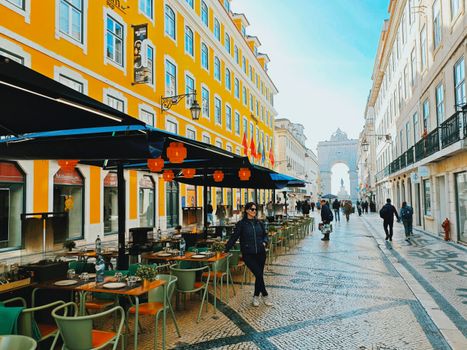
I stepped off the yellow No. 28 tram in Lisbon, the scent of warm pastéis de nata and salt air hitting me like a physical wave. It was 2:15 PM. My laptop was tucked under my arm, and while the locals were settling into their second glass of Vinho Verde, my workday was just beginning. In New York, my team was just waking up, pouring their first coffees, and firing off the morning’s “sync” messages.
For three years, I’ve chased the "Golden Window"—that elusive slice of the day where three continents are awake at once. I’ve worked from the humid coworking spaces of Canggu and the high-altitude cafes of Quito. What I’ve learned is that "work from anywhere" is a lie if you don't understand the math of the sun. Based on 2024 remote work trends and infrastructure data, here is exactly where you need to be to stay productive while living your best life.
1. The Atlantic Bridge: Why Portugal and Madeira Own the US/Europe Connection
If you are working for a US East Coast company but want the European lifestyle, the GMT/Western European Time (WET) zone is the undisputed heavyweight champion.
Recent data from the Global Remote Work Index ranks Portugal as a top-tier destination not just for its scenery, but for its fiber-optic penetration. In Lisbon or Funchal, you are 5 hours ahead of New York.
The Strategy: You spend your mornings surfing in Ericeira or exploring the Alfama district. You start work at 1:00 PM or 2:00 PM local time. By the time your US colleagues are signing on at 9:00 AM, you’ve already had a full "life" day. You overlap for 4-5 hours of high-intensity meetings and finish by 7:00 PM or 8:00 PM—just in time for a late Mediterranean dinner.
- Pro-Tip: In Lisbon, skip the crowded "Nomad" cafes in Chiado. Head to the Arroz Estúdios in Beato. It’s a creative hub with industrial vibes, killer Wi-Fi, and a community that actually works rather than just posing for the 'Gram.
2. The Americas Sweet Spot: Mexico City and Medellin
For those tethered to US Central or Eastern Time, the "No-Jet-Lag" zones are the most sustainable for long-term health. Mexico City (CDMX) and Medellin, Colombia, operate on CST/EST respectively.
According to 2024 arrival data, CDMX remains the #1 hub for North American remote workers. The "data" here isn't just time; it's the infrastructure. The Condesa and Roma Norte neighborhoods now boast 5G speeds that rival Manhattan.
The Strategy: You are in a 1:1 sync with your team. No math required. The benefit here is "Temporal Arbitrage." You work a standard 9-5, but your cost of living is 60% lower, and your "after-work" involves world-class tacos and mezcal bars rather than a grey commute.
- Pro-Tip: If you’re in Medellin, the "hidden" entrance to the best workspace is behind the unmarked black door next to Pergamino Cafe in El Poblado. It’s quieter, cooler, and the upload speeds are consistently above 100Mbps.
3. The Asian Sunrise: The Bali and Chiang Mai Struggle
Let’s look at the hard data: Working for a US-based company from Bali (WITA) is a recipe for burnout. You are 12-13 hours ahead. When they start their 9 AM meeting, it’s 10 PM for you.
However, if your clients are in Europe or Australia, Southeast Asia is a goldmine.
- Bali to London: 7-8 hour difference. You work 3 PM to 11 PM.
- Bali to Sydney: 0-2 hour difference. Total synchronization.
The Strategy: If you must work for the US from Asia, you have to go "Full Async." Use tools like Loom for video updates and Notion for documentation. If your job requires live meetings, this time zone will eventually break you.
- Pro-Tip: In Bali, the power grid can be finicky during monsoon season. Always book a villa that specifically mentions a "dedicated fiber line" and keep a pre-charged Starlink or high-capacity power bank.
4. The "Goldilocks" Zones: Cape Town and Tbilisi
There is a reason Cape Town is exploding in popularity for 2024. It sits in SAST (GMT+2). This is the "Goldilocks" zone because it perfectly bridges the gap between the UK, Europe, and the Middle East, while still offering a manageable afternoon start for US East Coast work.
Tbilisi, Georgia, is another rising star. With a 0% tax incentive for certain remote workers and a GMT+4 zone, it’s the gateway for those who need to touch base with both European markets and Asian manufacturing hubs.
The Strategy: From Cape Town, you are only 2 hours ahead of London. You can work a 10 AM to 6 PM schedule and be perfectly aligned with the entirety of Europe.
- Pro-Tip: In Cape Town, the "Load Shedding" (scheduled power outages) is real. Download the EskomSePush app immediately. Only work from cafes with backup generators—Workforce in the City Bowl is a reliable bet.
5. The Infrastructure Reality: Recent Data on Connectivity
You can have the perfect time zone, but if the "ping" is 300ms, you’re useless.
- Fastest Average Speeds (Nomad Hubs): Singapore (250+ Mbps), Bucharest (200+ Mbps), Bangkok (180+ Mbps).
- Most Improved 2024: Buenos Aires. Recent investments in fiber have made it a top contender for those working with US EST.
6. Logistics & Quick Facts Table
| Destination | Best For... | Time Zone | Avg. Internet | Monthly Cost (Est.) | | :--- | :--- | :--- | :--- | :--- | | Lisbon, Portugal | US East Coast / Europe | GMT+1 | 150 Mbps | $2,800 | | Mexico City, MX | US Central / EST | CST | 100 Mbps | $2,100 | | Cape Town, SA | Europe / UK / US East | GMT+2 | 50 Mbps | $1,800 | | Bali, Indonesia | Australia / Europe | GMT+8 | 40 Mbps | $1,500 | | Tbilisi, Georgia | Europe / Asia Bridge | GMT+4 | 60 Mbps | $1,300 |
\Requires generator-backed coworking for reliability.
7. How to Choose Your Zone: The 3-Hour Rule
My personal rule, backed by years of tracking my own productivity data, is the 3-Hour Rule: Never choose a location that requires more than 3 hours of "uncomfortable" overlap (working before 7 AM or after 9 PM) more than twice a week.
The most successful remote workers in 2024 are moving toward Asynchronous Work. They use the time zone difference as a feature, not a bug. They work while the "home office" sleeps, delivering finished projects just as the boss logs on. This is the ultimate power move.
How to get there:
- Audit your meetings: How many actually need you live?
- Test the waters: Use a VPN to test speeds in a potential Airbnb before booking a month-long stay.
- The "Slowmad" Approach: Stay at least 90 days. It takes 2 weeks just to adjust your circadian rhythm to a new "Golden Window."
The world isn't getting smaller, but our ability to navigate its clocks is getting better. Whether it's the brutalist beauty of a Belgrade coworking space or a sun-drenched patio in Oaxaca, the best time zone is the one that lets you work to live, not live to work.
---
More pictures




Tags
Share this guide
We may earn a commission if you click a link and buy a product or service, at no extra cost to you. How affiliate links work.
Been there?