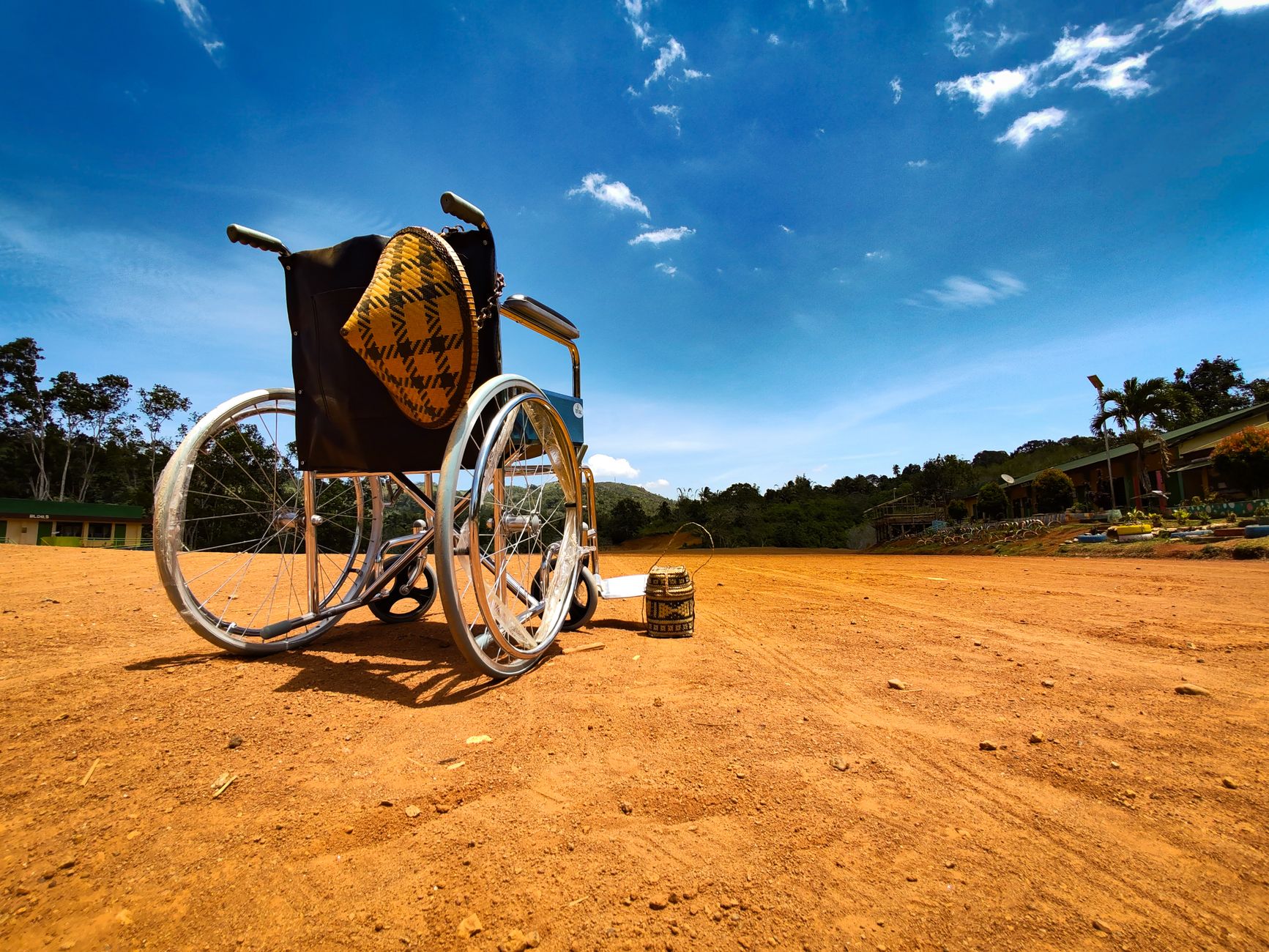
Gone are the days when the African bush was a "no-go" zone for travelers with mobility challenges. From hydraulic-lift Land Cruisers to silent electric engines perfect for sensory-sensitive explorers, we’re breaking down the high-tech, high-adrenaline world of inclusive safaris. This is your definitive blueprint for the wild, without the barriers.
The Clunk of Freedom: A New Dawn on the Savannah
I heard the mechanical hum before I felt the movement. Standing—or rather, sitting—at the edge of the Masai Mara, the scent of crushed red-oat grass and sun-baked earth filled my lungs. Usually, getting into a rugged 4x4 involves a series of undignified shoves and "one-two-three" heaves. Not this time. With the press of a remote, a heavy-duty hydraulic lift lowered from the side of a modified Toyota Land Cruiser. I rolled on, the platform rose with a satisfying clunk, and within seconds, I was eye-to-eye with a curious giraffe.
For decades, the safari industry was built on a "make-do" attitude for disabled travelers. You were carried, you were lifted, and you often missed out on the best views because you were tucked into the back of a van. But 2024 has flipped the script. We are witnessing a revolution in accessible safari vehicles and experiences emerging this year, driven by engineering brilliance and a long-overdue shift toward "Universal Design."
1. The Engineering Marvels: Beyond the Standard 4x4
The backbone of any safari is the vehicle, and the "standard" is being rebuilt from the chassis up. We aren't just talking about a ramp thrown over a door frame.
Hydraulic Lifts and Side-Loading Tech
The most significant trend this year is the integration of side-loading hydraulic lifts that disappear into the vehicle's bodywork. Brands like Endeavour Safaris and Epic Draw are leading the charge. These lifts can handle up to 300kg, meaning heavy powerchairs are no longer an obstacle.
The "Floor-Drop" Revolution
To ensure a wheelchair user has the same 360-degree visibility as a seated passenger, engineers are now "dropping" the internal floors of Land Cruisers. This lowers your center of gravity, significantly reducing the "bobblehead" effect on corrugated dirt roads, and ensures your head isn't hitting the roll cage every time you hit a pothole.
Q'Straint and Safety
Safety is the "unsexy" but vital part of the new tech. The emergence of Q’Straint retractable tie-down systems in safari vehicles ensures that even during a high-speed dash to catch a leopard sighting, your chair stays bolted to the frame.
2. The Silent Revolution: Electric Vehicles (EVs) and Sensory Access
Accessibility isn't just about mobility; it’s about sensory processing. Traditional diesel engines are loud, vibrate intensely, and emit pungent fumes—a nightmare for travelers with autism or sensory processing sensitivities.
The rise of Electric Safari Vehicles (ESVs) in conservancies like Lewa (Kenya) and the Chobe (Botswana) is a game-changer. These vehicles glide. You hear the crunch of the tires on sand and the distant call of a lilac-breasted roller, not the roar of a combustion engine.
- Pro-Tip: If you are traveling with someone who has noise sensitivity, book a lodge that utilizes ROAM or Opibus electric conversions. The lack of vibration also makes it significantly easier for photographers with limited upper-body stability to get a clear shot.
3. Water-Based Inclusion: The Mokoro Reimagined
The Okavango Delta was historically the most difficult terrain for wheelchair users. The traditional mokoro (dugout canoe) is notoriously unstable.
However, emerging this year are custom-built pontoon mokoros. These feature a wide, flat middle deck with a specialized bracket to lock a wheelchair in place. You get the same low-to-the-water perspective—watching reed frogs at eye level—without the fear of a tip-over. In Chobe, double-decker boats now feature motorized ramps, allowing you to access the "top deck" for sunset gin-and-tonics alongside every other guest.
4. The "Bush Chair" and Trekking Innovations
What happens when the vehicle stops? This year, we’ve seen a surge in the use of the Joëlette—a one-wheeled all-terrain chair operated by two guides. This allows travelers with mobility impairments to go on "walking" safaris or even trek for chimpanzees in Rwanda’s Nyungwe National Park.
Insider Language: Don't just ask for a "wheelchair." Ask if the lodge provides a "Sand Rider" or a "Hippocampe." These are specialized chairs with balloon tires designed specifically for the thick, Kalahari sand that swallows standard wheels whole.
5. Top Destinations Leading the Charge in 2024
South Africa: The Gold Standard
South Africa remains the leader. The Kruger National Park has revamped several of its "Hide" locations with lower viewing slots specifically for wheelchair height.
- The Go-To Lodge: Mala Mala Game Reserve. They have been the pioneers of accessible luxury for years, but their 2024 fleet upgrades are unrivaled.
Kenya: The New Challenger
Kenya is catching up fast. In the Masai Mara, Angama Mara offers a fully accessible experience, from the airfield to the "Rock" where Out of Africa was filmed. Their vehicles feature customized removable seats to make room for chairs.
Botswana: The Water Specialists
Xigera Safari Lodge in the Okavango Delta is a masterclass in architectural accessibility. No "handicap ramps" that look like an afterthought; instead, the entire lodge is a series of wide, gently sloping wooden walkways that feel like part of the design.
6. Quick Facts: Logistics & Budget
| Feature | Estimated Cost (Premium) | Best Time to Visit | Accessibility Rating | | :--- | :--- | :--- | :--- | | Private Adapted 4x4 | +$150 - $300 per day | June - October (Dry Season) | 5/5 | | Electric Safari | Included in Luxury Tiers | Year-round | 5/5 (Sensory) | | Accessible Bush Flight | $250 - $600 (Regional) | Dry Season | 3/5 (Small cabins) | | The Joëlette Trek | $100 per trek | June - August | 4/5 |
How to get there: Most accessible safaris start with a flight into OR Tambo (Johannesburg) or Jomo Kenyatta (Nairobi). From there, use "Federal Air" in SA, which has experience handling mobility devices in small bush planes.
7. Pro-Tips for the Wild
- The 7 AM Rule: If you are using a lift-equipped vehicle, aim to be the first out. While the lifts are fast, they add 5 minutes to the loading process. Being ready early ensures you don't miss the "Golden Hour" light.
- The "Blue Door" Secret: In many older lodges, the "accessible" room is often the one furthest from the dining area to ensure "privacy." Always request a room "close to the mess tent" to avoid long rolls over bumpy terrain.
- Voltage Check: If you use a powerchair, Africa’s 220-240V system is standard. However, bush camps run on solar. Pro-Tip: Bring a portable power station (like a Jackery) to ensure your chair charges overnight without draining the camp’s entire battery bank.
The Verdict: The Bush is Open
The wild doesn't care if you can walk, but for a long time, the travel industry did. The accessible safari vehicles and experiences emerging this year are more than just "inclusive"—they are better for everyone. They are quieter, safer, and more thoughtfully designed.
I remember the final night of my last trip. The sun was a bruised purple over the horizon. I wasn't watching from a distance through binoculars; I was right there, in the thick of the dust and the heat, the hydraulic lift of my vehicle a silent witness to the fact that the horizon belongs to all of us.
More pictures
Tags
Share this guide
We may earn a commission if you click a link and buy a product or service, at no extra cost to you. How affiliate links work.
Been there?