
Tired of crowded tourist traps? Join me on an exhilarating journey to uncover Europe's most magnificent abandoned castles, places so secret even locals guard them fiercely. Prepare to step back in time, explore for free, and capture truly unique memories far from the usual tourist trails.
The Whispers of Stone: Unlocking Europe's Secret Abandoned Castles
The rain was coming down in sheets, a typical Scottish summer welcome, as I navigated a narrow, overgrown lane somewhere in the Trossachs. My GPS had long given up, replaced by a crumpled, hand-drawn map given to me by a particularly enigmatic pub owner in a village I’d stumbled upon the night before. "Go past the old mill, then look for the fallen oak," he'd grumbled, a glint in his eye. "But dinnae tell anyone I sent ye."
And then, through a break in the mist and the ancient oaks, it appeared. Not a grand, restored fortress with gift shops and entry fees, but a skeletal silhouette against the grey sky – the ruins of what must have been a magnificent tower house, its walls crumbling, its windows gaping like empty eyes. No signs, no tourists, just the wind whistling through its stone bones and the bleating of sheep in the distance.
That moment, standing alone amidst centuries of forgotten history, was pure magic. It was the thrill of discovery, the quiet reverence for a past reclaimed by nature, and the undeniable satisfaction of finding something truly special, something that felt like my secret.
This, my fellow adventurers, is the allure of the abandoned castle. Forget the crowded ticket queues and guided tours. We're talking about the raw, untamed beauty of forgotten fortresses, free to explore, rich with untold stories, and often, cherished secrets that locals prefer to keep to themselves. At Tripsora, we're all about authentic, unforgettable experiences, and trust me, these hidden gems deliver.
Why Abandoned Castles? The Allure of the Forgotten
There’s a profound difference between visiting a preserved castle and exploring one that time has forgotten. While renovated castles offer a polished glimpse into history, abandoned ruins invite you to become a part of it. You’re not just observing; you’re an active participant in their ongoing story.
- Escape the Crowds: This is perhaps the most obvious benefit. In an age of overtourism, finding a place where you can truly connect with history in solitude is a rare privilege.
- A Photographer's Dream: The interplay of crumbling stone, vibrant moss, creeping ivy, and dramatic skies makes for breathtaking, Instagram-worthy shots that tell a story far beyond a perfectly manicured lawn. Think atmospheric, moody, and utterly unique.
- The Thrill of Discovery: There’s an undeniable rush that comes with finding these hidden places. It feels like uncovering a secret, a treasure map leading to a forgotten world.
- Connect with History Personally: Without the distractions of modern amenities, you can almost hear the echoes of knights and nobles, feel the weight of centuries of life lived within these walls. It’s a raw, unfiltered connection to the past.
- Budget-Friendly Adventure: The best part? These experiences are almost always completely free. Your only costs are getting there and perhaps a celebratory pint in a local pub afterwards.
Your Essential Guide to Ethical & Safe Exploration
Before you lace up your boots and grab your camera, remember: exploring abandoned sites comes with responsibilities. We want to be adventurers, not destroyers.
- Do Your Homework (Discreetly!): While these are 'secrets,' a little research goes a long way. Use satellite maps (Google Earth is your friend!), scour historical society websites, and look for old maps. Sometimes, local forums might offer clues. Always verify access rights – some ruins are on private land, and permission is essential.
- Safety First, Always:
- Sturdy Footwear: Uneven terrain, loose stones, and hidden holes are common. Hiking boots are non-negotiable.
- Go with a Buddy: Never explore truly abandoned structures alone. If you do, inform someone of your exact location and expected return time.
- Daylight Hours: Always explore during the day. Night exploration is dangerous and can lead to misunderstandings.
- Watch Your Step: Floors can be unstable, stairs crumbling, and debris plentiful. Look up for falling masonry. Assume nothing is structurally sound.
- First-Aid Kit & Water: Minor scrapes are inevitable. Stay hydrated.
- Know Your Limits: If a structure looks too dangerous, don't risk it. A photo isn't worth an injury.
- Leave No Trace, Take Only Photos:
- Pack It In, Pack It Out: Any trash you bring, take with you.
- Respect the Ruins: Do NOT climb on fragile walls, carve names, or move stones. These are historical sites, not playgrounds.
- No Souvenirs: Leave artifacts where you find them.
- Flora & Fauna: Respect the natural environment that has reclaimed these places.
- Respect Locals & Their Secrets:
- Be Discreet: If a local shares a secret location with you, honor their trust. Don't broadcast exact coordinates on social media. Share the spirit of the adventure, not necessarily the precise GPS pin.
- Support Local Businesses: Grab a coffee, buy lunch, or stay at a local guesthouse. Show your appreciation for the community.
- Ask Permission: If a ruin is on private land (e.g., a farmer's field), always ask permission before entering. A polite request often goes a long way.
- Gear Up:
- Camera Gear: A good camera (DSLR or mirrorless), wide-angle lens, and maybe a drone (check local regulations!) for epic shots.
- Headlamp/Flashlight: Even in daylight, internal rooms can be dark.
- Sturdy Backpack: To carry essentials.
- Weather-Appropriate Clothing: Layers are key, especially in unpredictable European weather.
Tripsora's Secret Stash: My Top 5 Free-to-Explore Abandoned Castles
Based on my countless adventures, here are a few types of hidden gems you can seek out. I’m not giving you exact GPS coordinates – that would spoil the thrill and disrespect the locals who've guarded these places for generations. Instead, I’m giving you the regions and the vibe so you can embark on your own treasure hunt!
1. The Whispering Walls of Glen Coe’s Forgotten Keep (Scottish Highlands, UK)
My first true abandoned castle experience, the one that sparked this obsession, was near the dramatic landscapes of Glen Coe. It wasn't advertised, didn't appear on any tourist maps, and required a tip from a grizzled local shepherd.
The Vibe: Imagine a solitary, stone tower house, dating back to the 15th century, perched on a rocky outcrop overlooking a loch, surrounded by nothing but heather and the majestic, often misty, peaks of the Highlands. The wind howls through its empty windows, carrying whispers of ancient clan rivalries and forgotten battles. The stone is dark, covered in lichen, and feels as old as the mountains themselves. Sheep graze nonchalantly inside the crumbling courtyard, their bells the only sound breaking the silence.
My Anecdote: I remember scrambling up the muddy path, the air thick with damp earth and peat. As I stepped through a gaping archway, the mist momentarily cleared, revealing a breathtaking panorama of the loch below, framed perfectly by the ruined walls. It felt like I’d walked into a scene from Outlander, but without the film crew. I spent hours just sitting there, absorbing the atmosphere, imagining life within those walls, and feeling utterly insignificant yet profoundly connected to history.
Practical Tips: This type of ruin often requires a short, moderate hike (30-60 minutes) from a barely-there parking spot. Look for small, unpaved lay-bys on scenic routes. The best time to visit is early morning or late afternoon for dramatic light, especially if you catch a sunrise or sunset filtering through the stone. Afterwards, head to a small, independent pub in a nearby village like Glencoe or Kinlochleven – their log fires and local ales are the perfect reward.
Instagram Moment: A wide-angle shot of the castle silhouetted against a dramatic, moody sky, with a lone sheep in the foreground. Or, a close-up of moss-covered stone against the misty loch.
2. The Emerald Embrace of Ballynahown Castle (County Clare, Ireland)
On a road trip through Ireland’s Wild Atlantic Way, seeking out the less-traveled paths, I heard faint rumors of a "fairy castle" from a local B&B owner. It took some navigating down a series of increasingly narrow, hedgerow-lined roads, but the reward was immense.
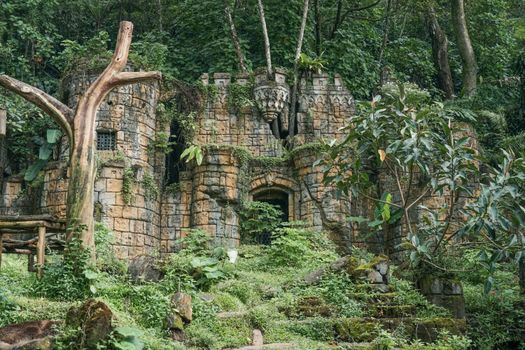
The Vibe: This isn't a towering fortress, but rather a romantic, ivy-clad ruin – perhaps a 16th-century tower house or small manor – almost entirely consumed by nature. Thick, vibrant green ivy clings to every stone, weaving itself through windows and doorways, giving the impression that the castle is literally being hugged by the emerald landscape. Ancient trees stand guard, their roots snaking across the ground like sleeping serpents.
My Anecdote: I found it nestled in a hollow, a sudden, almost magical appearance from behind a dense thicket of trees. The air was heavy with the scent of damp earth and wildflowers. I carefully picked my way inside, the ground soft with decades of fallen leaves. Sunlight dappled through the ivy-choked openings, creating an ethereal glow. I distinctly remember finding a small, perfectly preserved stone fireplace, still black with soot, hinting at countless forgotten evenings. I half-expected a leprechaun to pop out from behind a crumbling wall.
Practical Tips: These ruins are often found on private farmland. Crucially, always ask permission from the landowner if you suspect you’re on private property. A simple knock on a farmhouse door, a polite explanation, and a smile can open doors (or gates!). Wear waterproof boots; Ireland is often wet. Look for these types of ruins slightly inland from the main coastal routes, using old ordnance survey maps.
Instagram Moment: An intricate shot of ivy framing a window, with the lush green Irish countryside beyond. Or, a detail shot of an ancient, moss-covered archway.
3. Portugal's Sunken Secret: Castelo de Almourol's Forgotten Cousin (Central Portugal)
While Castelo de Almourol is famous, a local fisherman in the Ribatejo region once pointed me towards a truly hidden gem, a lesser-known ruin partially submerged by a reservoir.
The Vibe: Picture a medieval watchtower or small fortification, its lower levels forever claimed by the still, dark waters of a vast reservoir. During dry spells, more of its secrets might be revealed. The visible remains stand stark against the blue sky, reflecting in the water, creating a hauntingly beautiful scene. It's remote, silent, and carries a profound sense of isolation. The surrounding landscape is often scrubland and pine forests, adding to the feeling of being truly off-grid.
My Anecdote: It was a sweltering Portuguese afternoon when I finally spotted it after a long drive down a dusty, unpaved track. The heat shimmered off the water, and the castle seemed to rise directly from the liquid surface. I carefully navigated down to the shoreline, wading in the cool water to get a closer look. The stone felt rough and ancient, and the water lapped gently against its base, as if whispering its history. The silence was absolute, broken only by the chirping of cicadas and the occasional splash of a fish. It felt like discovering a lost Atlantis.
Practical Tips: These types of ruins are best accessed by car, often requiring navigation down rough, unpaved roads. A 4x4 isn't always necessary, but a vehicle with good ground clearance helps. Visit at sunset for truly spectacular reflections and colours. Be mindful of water levels, especially if you plan to get close to the base – sudden changes can occur. Look for these near older reservoirs or rivers that have been dammed, using satellite imagery to spot isolated structures.
Instagram Moment: A symmetrical reflection of the castle ruins in the still reservoir water at sunset. Or, a drone shot showcasing its isolation in the vast landscape.
4. The Carpathian Ghost: Cetatea Rupea's Wild Neighbor (Transylvania, Romania)
Everyone knows Bran Castle, but deep in the forests of Transylvania, there are countless other, far more atmospheric ruins. One such gem, revealed by a friendly local hiker, was a crumbling fortress high on a ridge, not far from the better-known Cetatea Rupea.
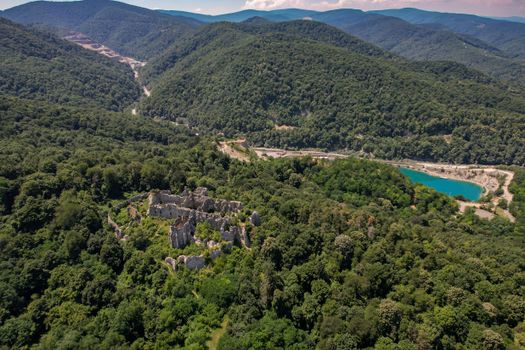
The Vibe: This is the stuff of gothic fairytales and vampire legends. A substantial fortress, now mostly rubble and overgrown walls, clinging to a steep, forested hillside. It offers panoramic views of valleys shrouded in mist, dense forests, and perhaps a distant village. The air is cool, often damp, and the atmosphere is undeniably eerie and mysterious, especially on an overcast day. Think crumbling towers, dark archways, and a sense of forgotten power.
My Anecdote: The hike was strenuous, up a winding, unmarked path through dense forest. Every rustle of leaves made me jump. When I finally emerged onto a plateau, the ruins burst into view – far larger and more imposing than I’d imagined. I spent hours exploring its various levels, carefully climbing over fallen stones, imagining sentries on watch. At one point, a thick fog rolled in from the valley, engulfing the castle in an ethereal shroud. It felt like I was the last person on earth, exploring a truly lost kingdom.
Practical Tips: These require a good level of fitness and proper hiking gear. Always carry a physical map or an offline GPS app, as phone signal can be nonexistent. Be aware of wildlife – bears and wolves are present in some Romanian forests, so make noise and be cautious. Locals are incredibly friendly and often happy to point you in the right direction if you ask politely in Romanian (even a few words go a long way).
Instagram Moment: A dramatic shot of the castle ruins emerging from a misty forest, or a panoramic view of the valley from a high, crumbling wall.
5. France's Forgotten Fairytale: Château de la Mothe-Chandeniers' Secret Sister (Loire Valley, France)
While Château de la Mothe-Chandeniers has gained fame, there are still other forgotten châteaux in France, often in regions adjacent to the famous Loire Valley, that remain truly hidden. One I found required a tip from a local vineyard owner.
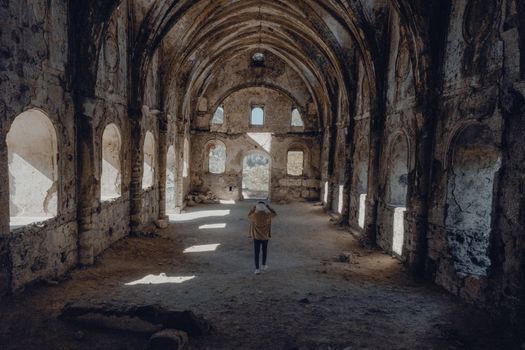
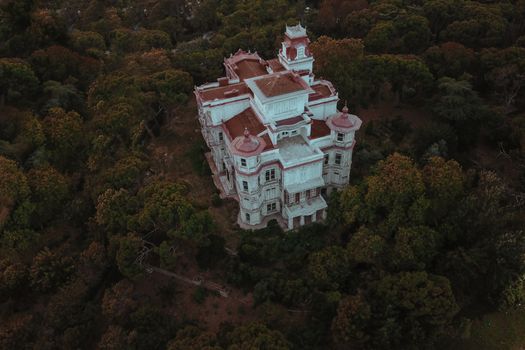
The Vibe: This is a more elegant type of ruin, often a 17th or 18th-century château, now completely consumed by nature. Think grand, sweeping staircases choked with ivy, once-ornate fireplaces now open to the elements, and perhaps a decaying ballroom floor where trees now grow. It's a poignant testament to faded grandeur, a beautiful blend of man-made artistry and nature's relentless reclaiming power.
My Anecdote: I was cycling through the lesser-known Anjou region, following a suggestion from a local winemaker, when I saw a faint, overgrown track leading into a dense wood. Curious, I left my bike and pushed through the undergrowth. What I found was breathtaking: a large, symmetrical château, its windows shattered, its roof long gone, but its elegant façade still standing, adorned with creeping roses and ancient wisteria. Inside, a magnificent stone staircase spiraled upwards, its banister wrapped in ivy. It felt like walking into a Sleeping Beauty fairytale, years after the prince had given up.
Practical Tips: These are often found near small, sleepy villages or deep within private estates. Access might be via an unmarked path from a quiet road. Be incredibly respectful – these are often still technically private property, even if abandoned. Do not force entry or damage anything. The best time to visit is spring, when the flowers and greenery are at their most vibrant, or autumn for dramatic colours. Afterwards, treat yourself to a pastry from a tiny, authentic boulangerie in a nearby hamlet – the perfect French experience.
Instagram Moment: A close-up of an elegant, ivy-covered stone façade, or a shot looking up a grand, crumbling staircase wrapped in greenery.
Beyond the Castles: Embracing the Local Experience
The real beauty of these adventures isn't just the castles themselves; it's the journey and the people you meet along the way.
- Support Local: Always make an effort to eat at local restaurants, stay in independent guesthouses, and buy from local shops. Your tourism dollars make a huge difference in these smaller, off-the-beaten-path communities.
- Learn a Few Phrases: A simple "hello," "thank you," and "please" in the local language can unlock incredible warmth and hospitality.
- Be Open to Detours: The best discoveries often happen when you abandon your strict itinerary and follow a gut feeling or a local recommendation.
Your Next Adventure Awaits: How to Find Your Own Hidden Gems
Ready to become a castle hunter? Here’s how you can start finding your own secret spots:
- Google Earth/Maps Exploration: Spend hours virtually "driving" or "flying" through rural areas, especially those with rich histories. Look for unusual clusters of trees, faint outlines of walls, or isolated structures.
- Old Maps: Consult historical maps (often available online through libraries or archives). They might show castles or fortified houses that no longer exist on modern maps but whose ruins persist.
- Local Forums & Historical Societies: Engage with online communities or local historical groups. They often hold a wealth of knowledge, though you might need to build trust before they share truly guarded secrets.
- Word-of-Mouth (Discreetly!): Chat with locals in pubs, cafes, or markets. Ask if there are any old ruins or interesting historical sites "off the main road." Be genuinely curious and respectful.
- Look for Clues: Keep an eye out for small, faded brown tourist signs that might point to a "ruin" or "historical site" – these often lead to less-visited spots.
Your Journey into the Past Starts Now
Exploring abandoned castles is more than just a trip; it's an odyssey into the past, a personal connection with history, and an exhilarating adventure. It’s about the thrill of discovery, the quiet reverence for forgotten beauty, and the profound satisfaction of uncovering secrets that few others ever get to experience.
So, pack your bags, charge your camera, and prepare to embark on an adventure that will forever change the way you see travel. These whispers of stone are waiting. Will you answer their call?
Have you discovered any incredible abandoned castles? Share your tips (responsibly, of course!) in the comments below! And don't forget to share this post with your fellow adventurers – let's inspire more ethical, off-the-beaten-path exploration!
---
More pictures

Tags
Share this guide
We may earn a commission if you click a link and buy a product or service, at no extra cost to you. How affiliate links work.
Been there?